AI Calorie Counter Scale: How It Works & Who Should Use It
AI Calorie Counter Scale: How It Works and Who It's For
Staring at your food, trying to guess if that's 4 ounces or 6 ounces of chicken breast. Opening your calorie tracking app for the hundredth time today. Scrolling through endless food databases looking for "homemade lasagna" that somehow matches what's actually on your plate.
Sound familiar? Manual calorie counting works, but it's tedious. That's where an ai calorie counter scale comes in—promising to automate the most annoying parts of food tracking while keeping the accuracy you need for real results.
But how do these smart scales actually work? Are they worth the investment? And most importantly, will they help you reach your goals faster than traditional methods?
Let's break down everything you need to know about AI-powered food scales and whether one belongs in your kitchen.
What Is an AI Calorie Counter Scale?
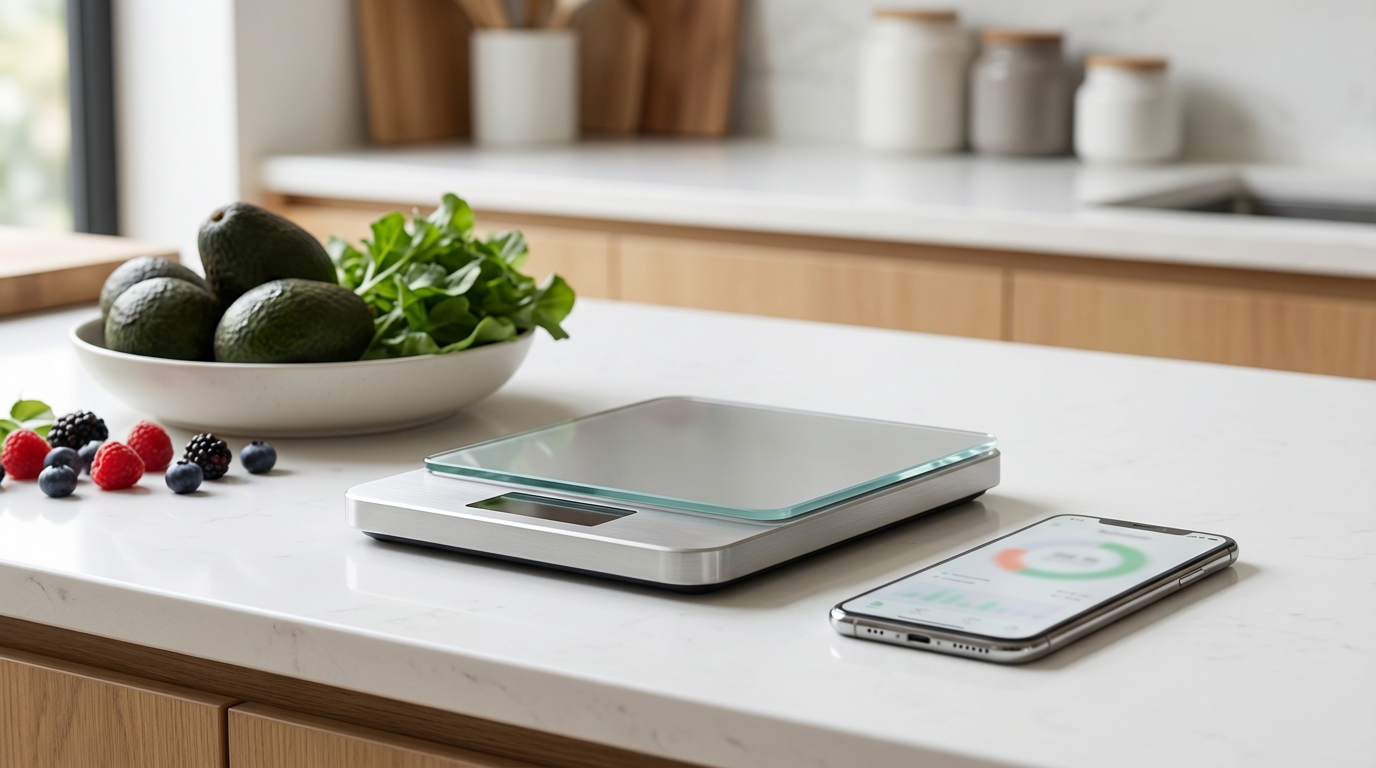
An AI calorie counter scale combines precision weighing with artificial intelligence to automatically identify foods and calculate their nutritional content. Instead of manually logging "150g grilled chicken breast" into an app, you simply place your food on the scale. The AI recognizes what it is, weighs it precisely, and logs the calories and macros for you.
These devices typically use computer vision (analyzing photos of your food) or built-in food recognition databases to identify what you're eating. Some connect to smartphone apps, while others have built-in displays showing nutritional information in real-time.
The goal? Make accurate calorie tracking as effortless as possible while eliminating the guesswork that derails so many nutrition plans.
How AI Calorie Counter Scales Work
Food Recognition Technology
Most AI scales use one of two approaches for food identification:
Visual recognition analyzes the appearance, color, and texture of foods through built-in cameras or smartphone integration. The AI has been trained on thousands of food images to distinguish between similar items—like recognizing the difference between white rice and quinoa.
Database matching relies on extensive food libraries combined with user input. You might select from a few options the scale suggests, then it handles the precise weight calculations and nutritional breakdown.
Weight and Portion Precision
While manual logging often involves eyeballing portions ("that looks like a cup"), smart food scale calories are calculated from exact weights. This eliminates one of the biggest sources of tracking errors.
The scale measures your food to the gram, then applies nutritional data for that specific weight. No more wondering if your "medium banana" was actually large, or if that handful of nuts was closer to 1 ounce or 2.
Automatic Calorie Logging Integration
Once identified and weighed, the nutritional information syncs directly to your tracking app. Your calories, protein, carbs, and fats update automatically—no typing, searching, or manual entry required.
Some systems can even recognize multiple foods on the same plate, separating and calculating each component individually.
Key AI Calorie Counter Scale Benefits
Speed and Convenience
The biggest advantage is time savings. Manual logging can take 2-3 minutes per meal when you factor in searching databases, adjusting portions, and entering custom recipes. An AI scale reduces this to seconds.
For someone tracking 4-5 eating occasions per day, that's potentially 10-15 minutes saved daily. Over a month, that's hours of your life back.
Improved Accuracy
Human portion estimation is notoriously unreliable. Studies show people typically underestimate calorie intake by 20-40%, often due to poor portion awareness.
Precision weighing eliminates this guesswork. Whether you're cutting fat or trying to eat enough protein for muscle gain, knowing your exact intake makes a massive difference in results.
Reduced Tracking Fatigue
Many people abandon calorie counting because it feels like a part-time job. The constant logging, searching, and calculating becomes overwhelming.
Automatic calorie logging removes much of this friction. When tracking feels effortless, you're more likely to stick with it long enough to see real changes.
Better Data for Adjustments
Accurate data leads to better decisions. If your weight isn't moving as expected, you'll know whether it's truly a calorie issue or something else—because your intake numbers will actually be reliable.
Who Should Consider an AI Calorie Counter Scale?
Serious Fat Loss Goals
If you're trying to lose significant weight or break through a plateau, precision matters. Small tracking errors can easily wipe out a modest calorie deficit.
An AI scale helps ensure you're actually in the deficit you think you are—not accidentally eating at maintenance due to underestimating portions.
Macro Tracking for Body Composition
Bodybuilders, physique competitors, and anyone focused on specific protein/carb/fat targets benefit enormously from precise macro tracking. When you need to hit 180g protein daily, knowing exactly how much is in each meal becomes crucial.
Busy Professionals
If time is your biggest barrier to consistent tracking, automation can be a game-changer. The convenience factor alone might mean the difference between tracking consistently and giving up after two weeks.
People with Portion Distortion
Some individuals consistently overestimate or underestimate portions, making manual tracking unreliable. An AI scale provides objective measurements that remove personal bias from the equation.
Meal Prep Enthusiasts
Batch cooking becomes more precise when you can quickly weigh and log ingredients in bulk, then divide by portions. This is especially useful for calculating homemade recipe macros accurately.
Limitations to Consider
Food Recognition Challenges
AI isn't perfect. Complex dishes, mixed foods, or unusual preparations can confuse recognition systems. A homemade stir-fry with 8 ingredients might require manual input for each component.
Similarly, foods that look alike (different cuts of meat, various cheese types) might be misidentified, requiring user correction.
Database Limitations
No food database is complete. Regional foods, specialty ingredients, or brand-specific items might not be recognized, falling back to manual entry anyway.
Learning Curve and Setup
Most systems require initial setup, app downloads, and some learning to use effectively. The "effortless" experience isn't immediate—there's typically a week or two of adjustment.
Cost Consideration
Quality AI scales cost significantly more than basic kitchen scales. You're paying for convenience and technology, which may not be worth it for casual trackers.
Common Mistakes When Using Smart Scales
Assuming 100% Accuracy
Even the best AI can make mistakes. Always double-check unusual readings or foods that don't look right in your log. Trust but verify.
Neglecting Mixed Dishes
Casseroles, soups, and complex recipes often need manual component entry. Don't assume the AI can perfectly analyze your grandmother's lasagna recipe.
Forgetting Oils and Condiments
Small additions like cooking oils, salad dressings, or sauces might not register visually but add significant calories. Track these separately when needed.
Over-Relying on Technology
Learning to eyeball portions is still valuable for situations when you don't have your scale. Don't let the technology completely replace your portion awareness skills.
Making the Most of Your AI Scale
Start with Simple Foods
Begin by weighing single-ingredient foods (chicken breast, rice, vegetables) to build confidence in the system before tackling complex meals.
Create Custom Entries for Frequent Foods
If you eat specific brands or preparations regularly, set up custom entries to ensure consistency and accuracy.
Use for Meal Prep Planning
Weigh ingredients as you cook in bulk, then use the total nutritional information to calculate per-serving macros for your meal prep containers.
Combine with Recipe Features
Many systems let you save complete recipes. Build a library of your go-to meals for even faster logging.
The Future of Food Tracking
Technology like Qalzy's AI-powered kitchen scale represents where nutrition tracking is heading—toward automation that maintains accuracy while reducing user burden.
As AI recognition improves and food databases expand, these tools will become even more reliable and user-friendly. The goal isn't to replace nutritional knowledge, but to remove the tedious parts of tracking so you can focus on actually eating well.
For many people, the combination of precision weighing and automatic logging bridges the gap between wanting to track nutrition and actually doing it consistently.
Choosing the Right System for You
Consider your primary goals, technical comfort level, and budget. If you're serious about body composition changes and value time savings, an AI scale could be transformative.
If you're a casual tracker or just starting your nutrition journey, a basic food scale plus a good tracking app might be sufficient initially. You can always upgrade later as your needs evolve.
Look for systems with strong food databases, regular updates, and good customer support. The technology is only as good as the data behind it.
Frequently Asked Questions
How accurate are AI calorie counter scales compared to manual tracking? AI scales are typically more accurate for portion sizes since they eliminate human estimation errors. However, food recognition accuracy varies by system and food type, usually ranging from 85-95% for common foods.
Can AI scales recognize homemade recipes and mixed dishes? Most systems struggle with complex mixed dishes. You may need to weigh individual ingredients separately or create custom recipe entries for best accuracy.
Do I need a smartphone to use an AI calorie counter scale? Most AI scales require smartphone connectivity for food recognition and data syncing. Some have built-in displays, but the full feature set typically requires an app.
How much do quality AI calorie counter scales cost? Prices range from $100-400 for consumer models, with professional-grade systems costing more. Consider it an investment in long-term health tracking consistency.
Will an AI scale work for tracking macros, not just calories? Yes, most systems provide complete macro breakdowns (protein, carbs, fats) along with calorie counts, making them suitable for detailed macro tracking goals.
What happens if the AI misidentifies my food? All quality systems allow manual correction and learning from mistakes. You can typically select the correct food from suggestions or search the database manually.
Ready to Simplify Your Nutrition Tracking?
If you're tired of manual logging but serious about your nutrition goals, an AI calorie counter scale might be exactly what you need. The combination of precision weighing and automated tracking can transform a tedious daily task into something effortless.
Qalzy's smart kitchen scale takes this concept further by combining AI food recognition with an intuitive app designed specifically for people who want accurate tracking without the hassle. Whether you're cutting fat, building muscle, or simply trying to eat more mindfully, having precise data makes every decision easier.
The question isn't whether technology can improve nutrition tracking—it's whether you're ready to let it. For many people, that shift from manual to automated logging becomes the difference between short-term diet attempts and long-term lifestyle changes.
Start with your goals, consider your current tracking challenges, and decide if the convenience and accuracy of an AI scale align with where you want to be. Your future self will thank you for making nutrition tracking sustainable rather than something you eventually abandon.
Explore more nutrition tracking strategies and tools in our comprehensive blog, or try our macro calculator to establish your baseline targets before diving into precision tracking.