Best Smart Food Scale Features for 2026: Complete Guide
Best Smart Food Scale Features to Look For in 2026
Tired of squinting at nutrition labels and playing guessing games with portion sizes? You're not alone. Finding the best smart food scale can transform your nutrition tracking from a daily chore into something surprisingly simple.
Smart food scales have evolved far beyond basic weight measurements. Today's top models combine precision sensors with AI-powered nutrition databases, making calorie and macro tracking more accurate than ever. But with dozens of options flooding the market, knowing which features actually matter can save you from buyer's remorse.
Let's cut through the marketing noise and focus on what really counts when choosing your next kitchen companion.
Why Smart Scales Beat Traditional Food Tracking
Manual food logging feels like doing taxes every meal. You're constantly searching databases, estimating portions, and second-guessing entries. Smart scales eliminate most of this friction.
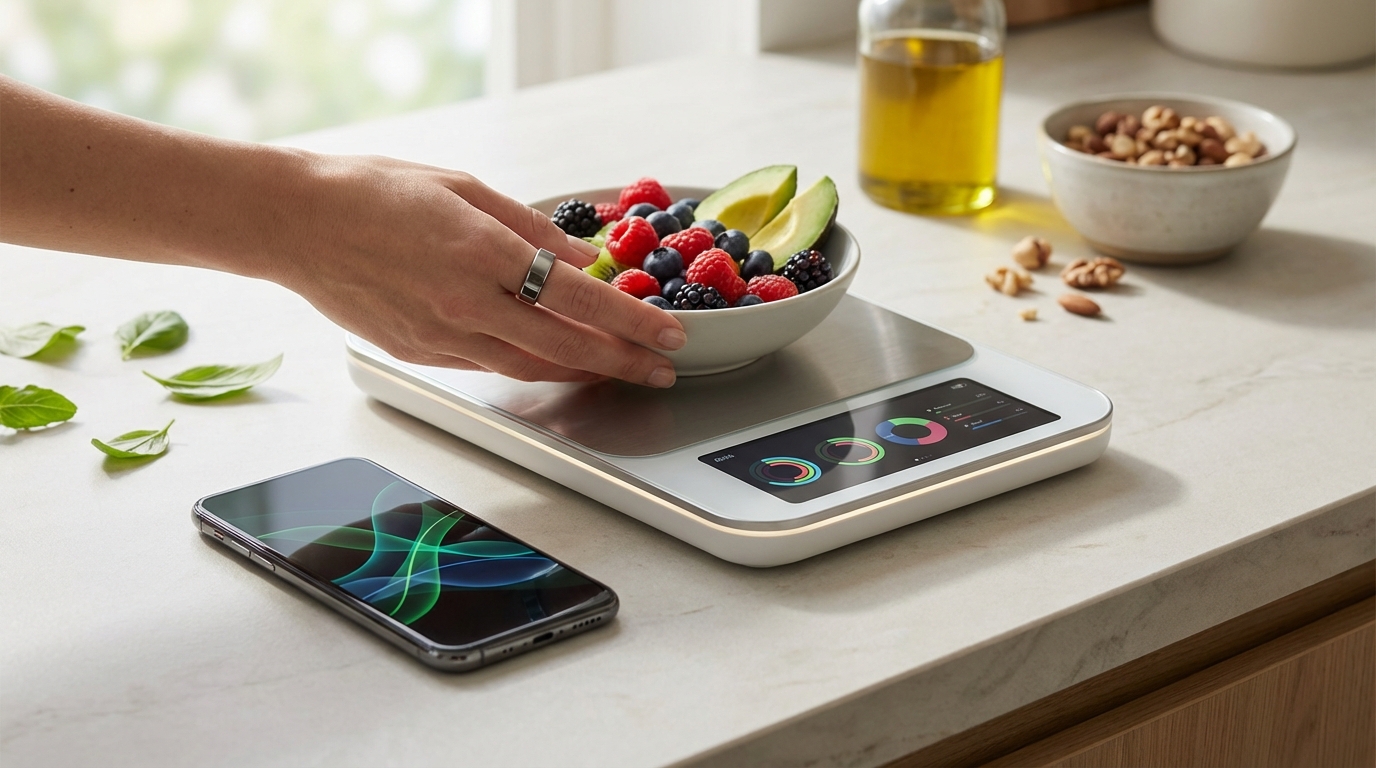
The best smart food scale options automatically recognize common foods and instantly calculate nutritional information. Place an apple on the scale, and within seconds you see calories, carbs, fiber, and more. No barcode scanning. No database searching. No mental math.
Research from nutrition tracking studies shows that people who use automated tracking tools maintain consistency 40% longer than those relying on manual entry alone.
But not all smart scales deliver on these promises. Some have tiny food databases. Others struggle with accuracy. Many lack the connectivity features that make tracking truly seamless.
Essential Accuracy Features for the Best Smart Food Scale 2026
Precision Sensors and Weight Range
Accuracy starts with the hardware. Look for scales with precision to at least 1 gram. Professional-grade models offer 0.1-gram accuracy, which matters when tracking calorie-dense foods like nuts or oils.
The weight range should handle everything from a single blueberry to a whole chicken. Most quality scales measure from 2 grams up to 5-10 kilograms. This range covers 99% of home cooking scenarios.
Multi-Sensor Technology
Top AI kitchen scales use multiple sensors to ensure consistent readings across the entire platform surface. Single-sensor models can give different readings depending on where you place food.
Look for scales that automatically compensate for temperature changes and surface variations. These features prevent the frustrating experience of getting different weights for the same item.
Tare Function and Container Recognition
A responsive tare function lets you zero out bowl weights instantly. Advanced models remember common container weights, so you don't need to tare every time you use your favorite mixing bowl.
Some scales even recognize specific containers and adjust their food recognition algorithms accordingly. A scale that knows you're using a cereal bowl versus a dinner plate can make better guesses about portion sizes.
AI and Food Recognition Capabilities
Database Size and Quality
When you compare smart food scales, database size matters less than database quality. A scale with 50,000 accurate entries beats one with 500,000 questionable ones.
The best systems combine comprehensive databases with machine learning that improves recognition over time. They learn your eating patterns and get better at identifying your most common foods.
Visual Recognition vs. Weight-Based Identification
Some scales use cameras for visual food recognition. Others rely on weight patterns and user confirmation. Each approach has trade-offs.
Visual recognition works great for whole foods like fruits and vegetables. Weight-based systems excel with processed foods and mixed dishes. The most versatile scales combine both methods.
Custom Food Learning
Look for scales that let you teach them new foods. Maybe you eat a specific brand of protein powder daily, or you've perfected a homemade energy ball recipe. Quality scales remember these custom entries and recognize them automatically in future sessions.
Connectivity and App Integration
Smartphone App Quality
The scale is only as good as its companion app. Test the app before buying if possible. Look for:
- Fast sync times
- Intuitive navigation
- Comprehensive nutrition breakdowns
- Meal planning features
- Progress tracking charts
Third-Party Integrations
The best smart food scale options play well with other health apps. Integration with MyFitnessPal, Apple Health, Google Fit, or Fitbit creates a complete health tracking ecosystem.
Some scales also connect with smart home systems. Imagine asking Alexa for your daily protein intake or having your scale data automatically log to your health dashboard.
Cloud Sync and Data Backup
Your nutrition data represents months or years of effort. Choose scales that automatically backup data to the cloud. This protects against phone crashes and makes switching devices painless.
Battery Life and Power Management
Battery Technology Options
Smart scales typically use either rechargeable lithium batteries or replaceable AAs. Rechargeable models offer convenience but eventually need battery replacement. AA models give you more control over power management.
The best options provide 6+ months of typical use per charge or battery set. Some scales include power-saving modes that extend battery life without sacrificing functionality.
Charging and Power Indicators
Look for scales with clear battery level indicators in both the device and app. Nothing's worse than a dead scale when you're trying to prep meals for the week.
USB-C charging has become standard on premium models. Avoid scales that still use proprietary charging cables.
Design and Build Quality Considerations
Platform Size and Materials
A larger platform accommodates bigger plates and mixing bowls. But oversized scales can dominate small kitchens. Find the sweet spot for your space and cooking style.
Tempered glass platforms look sleek and clean easily. Stainless steel offers durability but shows fingerprints. Some models use food-grade plastic that's lighter and more drop-resistant.
Display Options
Built-in displays let you see weights without grabbing your phone. But smartphone displays offer more detailed nutrition information and better visibility.
Some scales offer both – a basic LED display for quick weights plus full app integration for detailed tracking.
Water Resistance and Cleaning
Kitchen spills happen. Look for scales with at least IPX4 water resistance. This protects against splashes and makes cleaning easier.
Removable platform covers simplify deep cleaning. Some scales have dishwasher-safe components, though hand washing usually works fine.
Advanced Features Worth Considering
Portion Control Guidance
Some scales provide real-time portion recommendations based on your goals. If you're trying to lose weight, the scale might suggest stopping at 150g of rice instead of your usual 200g.
This feature works best when integrated with comprehensive goal-setting tools that account for your activity level, target weight, and timeline.
Recipe Scaling and Meal Prep
Advanced scales help scale recipes up or down automatically. Planning to make a recipe for four people instead of six? The scale calculates new ingredient amounts instantly.
Meal prep features let you batch-cook and portion meals while tracking nutrition for each container. This saves hours of manual calculation.
Multi-User Support
Family-friendly scales support multiple user profiles with separate goals and tracking histories. Each person can weigh food and have it automatically logged to their personal account.
Common Mistakes When Choosing Smart Food Scales
Focusing Only on Price
The cheapest option often costs more long-term. Inaccurate scales lead to tracking errors that derail your goals. Poor app support means frustrating daily experiences.
Invest in quality, but don't assume the most expensive option is automatically the best. Focus on features that match your specific needs.
Ignoring App Reviews
A great scale with terrible software becomes a paperweight. Read app store reviews carefully. Look for comments about accuracy, sync reliability, and customer support responsiveness.
Overlooking Food Database Coverage
If you eat a lot of international foods or specific dietary products, verify the scale recognizes them. Some databases skew heavily toward Western foods or popular brands.
Underestimating Setup Complexity
Some smart scales require extensive calibration and setup. Others work out of the box. Consider your technical comfort level and available setup time.
How Qalzy Stands Out in 2026
While researching the best smart food scale options, Qalzy consistently emerges as a standout choice for serious nutrition trackers. Their AI-powered approach combines hardware precision with intelligent software that actually learns your eating patterns.
What sets Qalzy apart is their focus on speed and accuracy. The scale recognizes common foods instantly, while the app provides detailed macro breakdowns without the usual database searching. For people who want to track nutrition consistently without the typical friction, it's worth exploring their complete nutrition tracking solution.
The integration between scale and app feels seamless – more like using a single tool than connecting separate devices. This matters when you're trying to build sustainable tracking habits.
Making Your Final Decision
Choose based on your actual usage patterns, not aspirational ones. If you meal prep once weekly, prioritize batch cooking features. If you track every meal, focus on speed and recognition accuracy.
Consider your kitchen setup too. Limited counter space might favor compact models. Frequent entertainers might need larger platforms and multi-user support.
Test the return policy before committing. Most quality brands offer 30-day returns, giving you time to evaluate real-world performance.
Frequently Asked Questions
How accurate are smart food scales compared to manual tracking? Quality smart scales typically achieve 95%+ accuracy for whole foods and 85-90% for complex dishes. This beats manual estimation, which averages 70-80% accuracy according to nutrition research.
Do smart scales work without internet connectivity? Most scales store data locally and sync when connectivity returns. However, food recognition features usually require internet access for database lookups.
Can smart scales recognize homemade recipes? Advanced models let you create custom recipes by weighing individual ingredients. The scale remembers these recipes and can identify them in future cooking sessions.
How long do smart scale batteries typically last? With normal use (3-5 weighings daily), expect 4-8 months per charge for rechargeable models or 6-12 months for AA battery models.
Are smart scales worth it for casual dieters? If you track food more than 3-4 times weekly, smart scales usually pay for themselves in time savings and improved accuracy within 2-3 months.
Do smart scales work with all diet types? Most scales support various dietary approaches, but database coverage varies. Verify that your preferred foods and brands are well-represented before purchasing.
Start Tracking Smarter Today
The best smart food scale for you depends on your specific goals, cooking style, and technical preferences. Focus on accuracy, app quality, and features that match your real usage patterns.
Ready to move beyond manual food logging? Explore Qalzy's AI-powered nutrition tracking to see how smart scales can transform your relationship with food tracking. Their combination of precision hardware and intelligent software makes consistent nutrition monitoring finally feel effortless.
The right smart scale doesn't just measure food – it makes healthy eating more sustainable by removing daily friction from nutrition tracking.