Calorie Tracking During Perimenopause & Menopause Guide
Calorie Tracking During Perimenopause and Menopause: Your Complete Guide
Your jeans feel tighter despite eating the same foods. Your energy crashes at 3 PM. The scale shows numbers you haven't seen in years, and you're wondering what happened to your metabolism.
Welcome to perimenopause and menopause – where your body rewrites the rules about weight, energy, and nutrition. If you've been frustrated with traditional calorie tracking during perimenopause and menopause, you're not alone. The strategies that worked in your 20s and 30s often fall short when hormones start shifting.
But here's the good news: you can absolutely manage your weight during this transition. You just need a smarter approach that works with your changing hormones, not against them.
Why Traditional Calorie Counting Falls Short During Menopause
Most calorie calculators assume your metabolism stays relatively stable. They don't account for the hormonal rollercoaster that begins in perimenopause and continues through menopause.
Estrogen doesn't just affect your reproductive system. It influences where your body stores fat, how efficiently you burn calories, and even how hungry you feel. As estrogen levels fluctuate and eventually decline, your body adapts by:
- Slowing your metabolic rate by 2-5% per decade after age 30
- Shifting fat storage from hips and thighs to your midsection
- Increasing insulin resistance, making it harder to process carbohydrates
- Reducing muscle mass, which burns more calories at rest than fat tissue
Progesterone changes add another layer of complexity. Lower progesterone can increase cortisol sensitivity, making your body more likely to store calories as fat when you're stressed.
Understanding Your Changing Calorie Needs
Perimenopause: The Fluctuation Phase
Perimenopause typically begins in your 40s, though it can start earlier. During this phase, your hormone levels fluctuate wildly from month to month. Your calorie needs might vary more than you expect.
Some weeks you might feel satisfied with 1,600 calories. Other weeks, the same amount leaves you constantly hungry. This isn't a lack of willpower – it's biology.
Menopause: The New Normal
Once you've gone 12 months without a period, you've reached menopause. Your hormone levels stabilize at lower levels, and your calorie needs become more predictable again. However, your baseline metabolic rate is likely 100-200 calories lower than it was in your 30s.
Hormone-Smart Calorie Tracking Strategies
Start With Accurate Baseline Measurements
Forget the generic online calculators. They're built for average bodies, not bodies in hormonal transition. Instead:
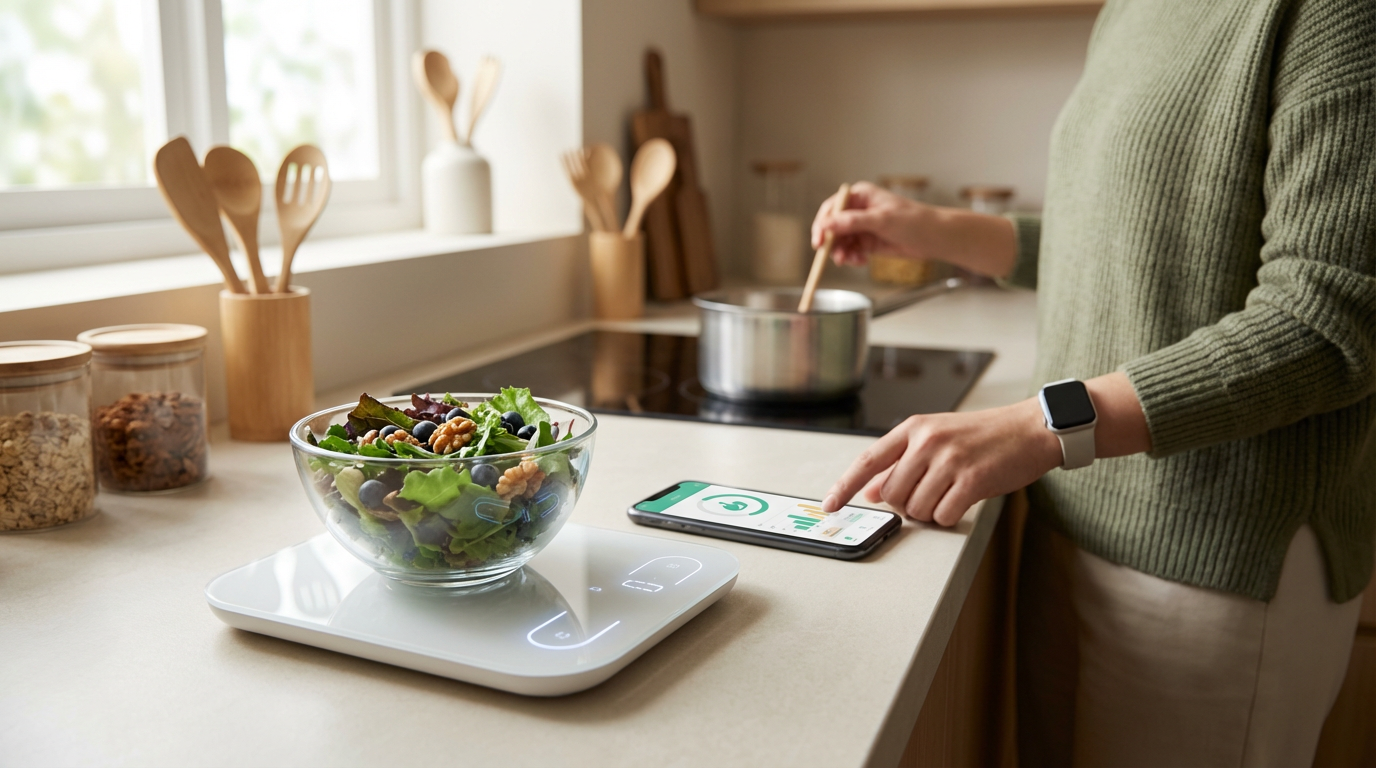
Track your current intake for 2-3 weeks without changing anything. Use a smart tracking system like Qalzy's AI-powered kitchen scale to get accurate portions without the hassle of manual logging. This gives you real data about your current eating patterns.
Monitor your energy and hunger levels alongside calories. Note which days you feel energized versus sluggish. Track when cravings hit hardest. These patterns often correlate with hormonal fluctuations.
Consider getting hormone testing. While not essential, knowing your estrogen, progesterone, and thyroid levels can help you understand why your energy and appetite vary so much.
Adjust Your Calorie Goals by Phase
For Perimenopause Weight Loss
Aim for a moderate deficit of 300-500 calories below your maintenance level. Aggressive deficits often backfire during perimenopause because they can worsen hormonal imbalances and increase cortisol.
Example: If you maintain weight at 1,800 calories, target 1,400-1,500 for gradual weight loss.
For Menopause Weight Loss
Your approach can be slightly more structured once hormones stabilize. A 400-600 calorie deficit often works well, but expect slower progress than in your younger years. Plan for 0.5-1 pound of loss per week rather than 1-2 pounds.
For Weight Maintenance
Many women find they need 100-300 fewer calories to maintain the same weight post-menopause. This adjustment isn't permanent failure – it's normal adaptation.
Focus on Menopause Nutrition Quality
Calorie quantity matters, but quality becomes even more crucial during hormonal transitions. Your body needs specific nutrients to support hormone production and maintain muscle mass.
Prioritize protein at every meal. Aim for 25-30 grams per meal to support muscle maintenance and keep you satisfied longer. Protein also has a higher thermic effect, meaning you burn more calories digesting it.
Choose complex carbohydrates over simple sugars. Your insulin sensitivity may be lower now, so foods like quinoa, sweet potatoes, and steel-cut oats will serve you better than refined grains.
Don't fear healthy fats. Your body needs fats to produce hormones. Include sources like avocados, nuts, olive oil, and fatty fish in your daily calories.
Managing Midlife Metabolism Changes
The Muscle Mass Factor
One of the biggest contributors to metabolic slowdown is muscle loss. After age 30, you lose about 3-8% of muscle mass per decade. This process accelerates during menopause due to declining estrogen.
Each pound of muscle burns about 6-7 calories per day at rest, while fat burns only 2-3 calories. Losing 5 pounds of muscle could reduce your daily calorie burn by 20-25 calories – which adds up to 2-3 pounds of fat gain per year if you don't adjust your intake.
The solution? Combine your calorie tracking with strength training 2-3 times per week. You don't need to become a powerlifter, but challenging your muscles regularly helps maintain your metabolic rate.
Sleep and Stress Impact on Hormone Changes and Calories
Poor sleep and chronic stress can sabotage even the most careful calorie tracking. Both disrupt hormones that control hunger and satiety:
- Ghrelin (hunger hormone) increases with sleep deprivation
- Leptin (fullness hormone) decreases when you're tired
- Cortisol stays elevated with chronic stress, promoting fat storage
Aim for 7-9 hours of sleep nightly and find stress management techniques that work for you. Your calorie goals will be much easier to stick to when these hormones are balanced.
Common Mistakes in Perimenopause Weight Loss
Mistake #1: Using Your Old Calorie Targets
That 1,200-calorie diet that worked at 25? It's likely too restrictive now and could slow your metabolism further.
Mistake #2: Ignoring Hunger Fluctuations
Trying to eat the exact same calories every day during perimenopause fights against natural hormonal rhythms. Some flexibility in your daily targets can improve long-term adherence.
Mistake #3: Cutting Calories Too Aggressively
Severe restriction can worsen menopause symptoms like hot flashes, mood swings, and sleep problems. A moderate approach works better for both weight loss and quality of life.
Mistake #4: Forgetting About Portion Accuracy
Eyeballing portions becomes less forgiving when your metabolism is slower. A "small handful" of nuts could easily be 200-300 calories instead of the 150 you think you're eating.
Making Calorie Tracking Easier During Menopause
Let's be honest – you have enough to deal with during menopause without spending 20 minutes logging every meal. The key is finding systems that give you accuracy without eating up your day.
Smart kitchen scales like Qalzy can eliminate the guesswork and tedious database searching that makes traditional calorie tracking so frustrating. When the scale can identify foods and calculate calories automatically, you're more likely to stick with tracking long-term.
Batch tracking also helps. Instead of logging every single ingredient, track your go-to meals and snacks once, then reuse those entries. Most people eat similar foods regularly, so this approach covers 80% of your intake with minimal effort.
Sample Day: Hormone-Smart Eating
Here's what 1,500 calories might look like with menopause nutrition in mind:
Breakfast (350 calories):
- 2 eggs scrambled with spinach
- 1 slice whole grain toast
- 1/4 avocado
Lunch (400 calories):
- Large salad with mixed greens, chickpeas, and olive oil dressing
- 4 oz grilled chicken
Snack (200 calories):
- Greek yogurt with berries
Dinner (450 calories):
- 5 oz salmon
- Roasted vegetables
- 1/2 cup quinoa
Evening snack (100 calories):
- Small handful of almonds
This sample provides about 100g protein, emphasizes whole foods, and includes hormone-supporting nutrients like omega-3 fatty acids and fiber.
Tracking Beyond the Scale
Weight fluctuations become more dramatic during perimenopause and menopause due to changing hormones affecting water retention. The scale might not budge for weeks, then drop 3 pounds overnight.
Track additional metrics to see your real progress:
- Body measurements (waist, hips, arms)
- How your clothes fit
- Energy levels throughout the day
- Sleep quality
- Mood stability
- Hot flash frequency and intensity
Many women find their weight stays the same but their body composition improves significantly when they combine smart calorie tracking with strength training.
When to Adjust Your Approach
Your calorie needs aren't set in stone during this transition. Reassess every 4-6 weeks:
If you're losing weight too quickly (more than 2 pounds per week), increase calories by 100-150 per day. Rapid weight loss can worsen menopause symptoms.
If you've plateaued for 3+ weeks, consider a small decrease of 100-150 calories, or take a diet break for 1-2 weeks at maintenance calories.
If you're constantly hungry or having intense cravings, your deficit might be too aggressive, or you might need to adjust your macronutrient ratios.
The Role of Supplements and HRT
Hormone replacement therapy (HRT) can significantly impact your calorie needs and appetite. Many women find weight management becomes easier with HRT because it helps restore some metabolic function.
If you're considering or starting HRT, work with your healthcare provider to monitor how it affects your appetite and weight. You might need to adjust your calorie targets as your hormones stabilize.
Certain supplements may also support your efforts:
- Protein powder can help you meet increased protein needs
- Omega-3 fatty acids support hormone production
- Vitamin D affects metabolism and mood
- Magnesium can improve sleep quality
Always consult your doctor before adding supplements, especially if you're on other medications.
Building Long-Term Success
The most successful approach to calorie tracking during perimenopause and menopause isn't about perfect adherence to rigid numbers. It's about developing a sustainable system that adapts to your changing body.
Start with accurate tracking using tools that make the process easier, like Qalzy's smart nutrition tracking. Focus on consistency over perfection. Track 80% of your meals accurately rather than trying to log every single bite.
Remember that this transition is temporary. While the changes to your metabolism are real, they're not insurmountable. Thousands of women successfully manage their weight during and after menopause by working with their hormones rather than against them.
Frequently Asked Questions
How many fewer calories do I need after menopause? Most women need 100-300 fewer calories daily to maintain the same weight after menopause. The exact amount depends on your muscle mass, activity level, and individual metabolism.
Should I eat the same calories every day during perimenopause? Not necessarily. Your appetite and energy needs may fluctuate with hormonal changes. Having a target range (like 1,400-1,600 calories) rather than a fixed number can work better.
Why am I gaining weight even though I'm eating less? Several factors could be at play: muscle loss, hormonal changes affecting where you store fat, water retention, or underestimating portion sizes. Consider getting a metabolic assessment or working with a registered dietitian.
Can I still lose weight after menopause? Absolutely. Weight loss is still possible after menopause, though it may happen more slowly. Focus on a moderate calorie deficit, adequate protein, and strength training for best results.
How do I know if my calorie target is too low? Signs include constant fatigue, intense cravings, mood swings, worsening menopause symptoms, or losing weight too quickly (more than 2 pounds per week).
Should I track calories differently if I'm on hormone replacement therapy? HRT can affect your appetite and metabolism, so you might need to adjust your calorie targets. Monitor your hunger levels and weight changes, and modify your goals as needed.
Navigating calorie tracking during perimenopause and menopause requires patience, flexibility, and the right tools. By understanding how your hormonal changes affect your metabolism and adjusting your approach accordingly, you can successfully manage your weight during this transition and beyond.
Ready to simplify your nutrition tracking? Explore how Qalzy's AI-powered kitchen scale can make accurate calorie tracking effortless, giving you more time to focus on the lifestyle changes that matter most during menopause.