Food Scale That Counts Calories: 7 Real Kitchen Use Cases
Food Scale That Counts Calories: 7 Real-World Use Cases in Your Kitchen
You know the drill. Weigh your chicken breast. Open your tracking app. Search for "chicken breast raw." Scroll through dozens of entries. Pick one that looks close enough. Enter the weight. Close the app. Repeat for every ingredient.
By the time you've logged your meal, you've spent more time on your phone than actually cooking. This is exactly why most people abandon calorie tracking within weeks.
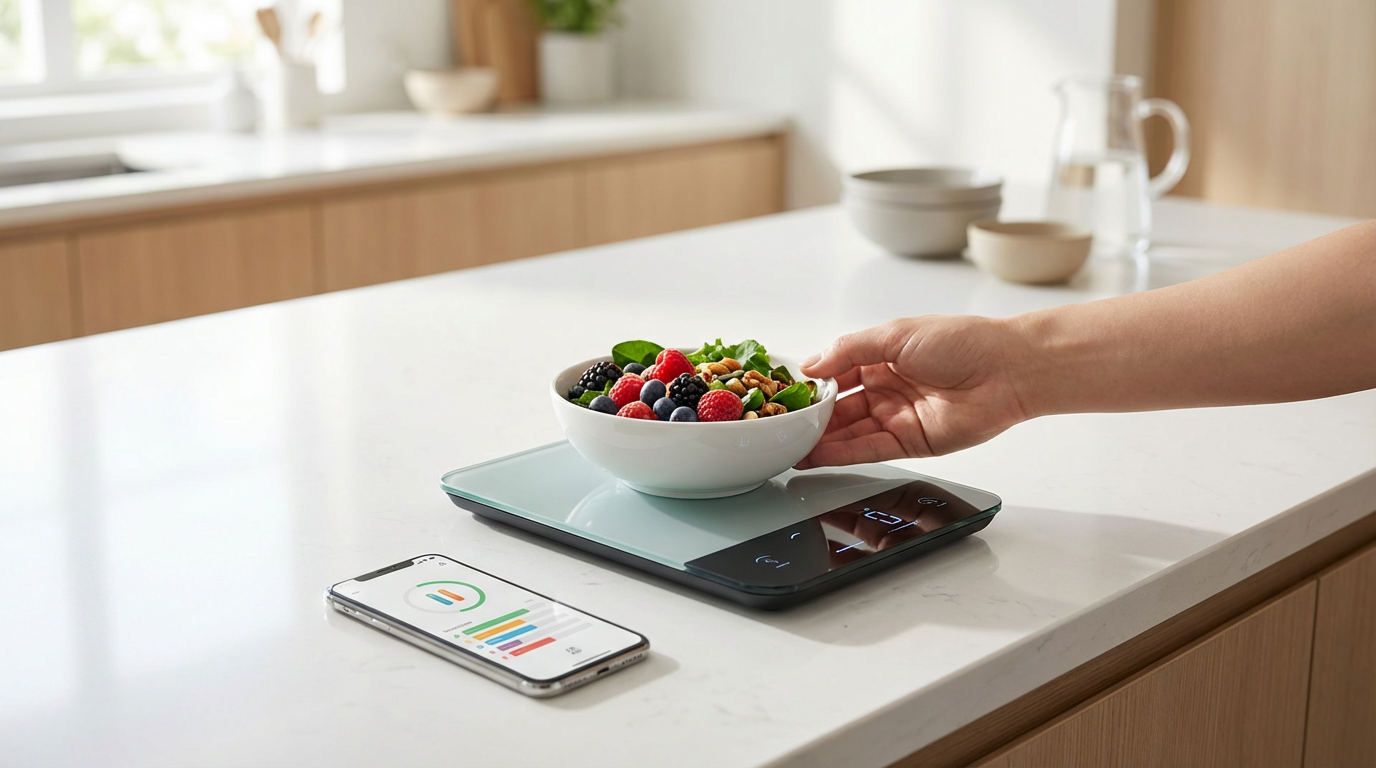
A food scale that counts calories changes this entire experience. Instead of weighing, searching, and manually logging every ingredient, you simply place food on the scale and get instant nutrition data. No apps to fumble with. No databases to search through.
Let's explore seven real scenarios where this technology transforms your daily kitchen routine.
1. Morning Coffee Preparation
Your morning coffee ritual probably involves more calories than you think. That splash of heavy cream? Those two teaspoons of sugar? The flavored syrup you "barely use"?
With a traditional scale, you'd need to:
- Weigh each addition separately
- Look up nutrition data for cream, sugar, and syrup
- Calculate totals manually
- Log everything in your tracking app
A food scale that counts calories automatically handles this differently. Place your mug on the scale. Add cream – the display shows calories and macros instantly. Add sugar – watch the numbers update in real time. Add syrup – see your final totals without opening any apps.
This is especially valuable for people who drink multiple cups daily. Those "small" additions add up quickly, and manual tracking makes it easy to underestimate.
2. Meal Prep Sundays
Meal prep sessions involve weighing dozens of ingredients across multiple recipes. Traditional tracking becomes a nightmare of switching between scales, apps, and recipe cards.
Here's where smart kitchen scale use cases really shine. You're making chicken and rice bowls for the week. Place your container on the scale. Add rice – calories appear instantly. Add chicken – watch the protein count climb. Add vegetables – see how the fiber and micronutrients stack up.
The scale calculates nutrition per serving automatically when you tell it how many portions you're making. No more dividing total calories by four and hoping your math is right.
For busy professionals who rely on meal prep, this eliminates the biggest friction point: the tedious logging process that makes prep sessions drag on forever.
3. Baking with Precision
Baking requires exact measurements, but tracking the nutrition in homemade treats usually involves guesswork. How many calories are in one of your chocolate chip cookies? Most people have no idea.
Traditional method: Weigh flour, sugar, butter, eggs, and chocolate chips separately. Look up each ingredient in your app. Add everything together. Calculate per-cookie nutrition based on batch size.
With calorie tracking without apps, you build your recipe directly on the scale. Each ingredient gets weighed and automatically added to your running total. When you're done, you know exactly how many calories are in the entire batch.
Divide by the number of cookies, and you have precise per-piece nutrition data. This is game-changing for people who love baking but want to stay on track with their goals.
4. Portion Control for Family Dinners
Serving family dinner while tracking your own portions creates an awkward dance. You're trying to serve everyone else while secretly weighing your own food and logging it before it gets cold.
A food scale that counts calories makes this seamless. Serve yourself directly on the scale. Each addition – pasta, sauce, vegetables, protein – updates your nutrition totals in real time. Your family doesn't wait, your food doesn't get cold, and you don't lose track of what you're eating.
This is particularly helpful for parents who want to model healthy eating habits without making nutrition tracking feel obsessive or disruptive to family meals.
5. Snack Attack Management
Snacking is where most tracking efforts fall apart. You're hungry, you want something quick, and the last thing you want to do is weigh almonds and search through nutrition databases.
But snacks are also where calories add up fastest. A "handful" of nuts can range from 100 to 400 calories depending on your hand size and definition of "handful."
Place your bowl on the scale. Pour in nuts until you hit your target calories. The scale shows you exactly when to stop. No measuring cups, no guessing, no post-snack regret when you realize you ate three servings instead of one.
The same principle works for chips, crackers, dried fruit, or any other snack food that's easy to overeat.
6. Restaurant Recipe Recreation
You loved that salad from your favorite restaurant, but ordering takeout every day doesn't fit your budget or goals. So you decide to recreate it at home.
Traditional tracking makes this frustrating. You're estimating ingredient amounts, looking up nutrition data for everything from mixed greens to salad dressing, and probably getting discouraged by how long it takes.
With smart technology, you weigh and log food as you build your salad. Greens, tomatoes, cucumber, cheese, nuts, dressing – each ingredient gets weighed and tracked automatically. You can adjust portions in real time to hit specific calorie or macro targets.
Bonus: Save your creation as a custom recipe for next time. Your homemade version might even be more nutritious than the restaurant original.
7. Late-Night Cooking Experiments
You're trying a new recipe at 9 PM. Everything's going great until you realize you need to track what you're making. Your phone battery is low, the lighting is dim, and you're trying to juggle cooking with nutrition logging.
This scenario breaks most people's tracking consistency. The friction is too high, so they either skip logging entirely or make rough estimates that throw off their daily totals.
A scale with built-in nutrition intelligence removes this friction completely. Cook your experiment. Weigh ingredients as you add them. Get nutrition data without touching your phone or opening any apps.
Your late-night creativity doesn't derail your tracking consistency.
The Technology Behind Smart Food Scales
Modern food scale that counts calories automatically devices use AI-powered food recognition combined with comprehensive nutrition databases. When you place food on the scale, the system identifies what you're weighing and pulls accurate nutrition data instantly.
Some scales use visual recognition through built-in cameras. Others rely on user input combined with weight data. The most advanced systems, like Qalzy's AI-powered scale, combine multiple identification methods for maximum accuracy.
The key advantage isn't just convenience – it's consistency. Manual logging introduces human error at every step. Wrong food selections, incorrect portion sizes, forgotten ingredients, and abandoned tracking sessions all add up to inaccurate data.
Automated systems eliminate most of these error sources, giving you more reliable nutrition information with less effort.
Common Mistakes When Choosing Smart Scales
Not all smart food scales are created equal. Here are the biggest mistakes people make when shopping:
Choosing based on price alone. The cheapest options often have limited food databases or require constant manual corrections. You end up with a fancy scale that still requires manual app logging.
Ignoring database size. Some scales only recognize a few hundred common foods. If you cook with diverse ingredients or ethnic cuisines, you'll constantly hit dead ends.
Overlooking connectivity issues. Scales that require constant WiFi or Bluetooth connections become frustrating when technology hiccups interrupt your cooking flow.
Forgetting about recipe features. Basic scales handle individual ingredients but struggle with complex recipes or meal combinations.
Not considering long-term costs. Some smart scales require monthly subscription fees for full functionality. Factor these ongoing costs into your decision.
Making the Switch: What to Expect
Transitioning from manual tracking to automated nutrition logging feels different at first. You're used to the rhythm of weigh-search-log-repeat. Suddenly, that entire process happens in seconds.
Most people experience a brief adjustment period where they double-check the scale's nutrition data against their old tracking apps. This is normal and smart – verify accuracy with foods you track regularly.
After a few weeks, the time savings become obvious. What used to take 2-3 minutes per ingredient now takes seconds. Meal prep sessions that stretched for hours finish much faster. Tracking consistency improves because the friction disappears.
Qalzy users report saving 15-20 minutes per day on nutrition tracking while improving accuracy and consistency.
Integration with Your Current Routine
Smart food scales work best when they complement your existing habits rather than replacing everything at once. Start with your most frequent cooking scenarios – morning coffee, lunch prep, or evening snacks.
Keep your current tracking app as backup during the transition. Most smart scales can export data to popular platforms like MyFitnessPal or Cronometer if needed.
Gradually expand usage as you get comfortable with the technology. The goal is making nutrition tracking feel effortless, not adding complexity to your kitchen routine.
Beyond Calorie Counting
While calorie tracking gets the most attention, smart food scales provide comprehensive nutrition data. Track protein for muscle building goals. Monitor fiber for digestive health. Watch sodium intake for blood pressure management.
Some scales highlight micronutrients often missing from standard tracking apps. Vitamin D, magnesium, omega-3 fatty acids – nutrients that matter for long-term health but rarely get tracked manually.
This broader nutrition picture helps you make better food choices beyond just hitting calorie targets. You start noticing which meals provide complete nutrition versus empty calories.
The Future of Kitchen Technology
Smart food scales represent the beginning of truly intelligent kitchen technology. Future versions will likely integrate with smart refrigerators, meal planning apps, and grocery delivery services.
Imagine a scale that suggests recipe modifications based on your nutrition goals. Or one that automatically orders ingredients when you're running low on frequently used items.
We're moving toward kitchens that actively support healthy eating rather than just providing cooking tools. The food scale that counts calories is your entry point into this smarter food future.
FAQ
How accurate are food scales that count calories automatically? Modern smart food scales typically achieve 90-95% accuracy for common foods, which is often better than manual tracking due to reduced human error. Accuracy varies by food type, with whole foods generally more accurate than complex prepared items.
Do I need WiFi for my smart food scale to work? Most smart scales can function offline for basic weighing and calorie counting, but WiFi connectivity enables features like database updates, recipe syncing, and data backup. Choose scales with robust offline capabilities if connectivity is inconsistent.
Can smart food scales recognize homemade recipes? Yes, advanced scales allow you to build and save custom recipes by weighing each ingredient as you add it. The scale calculates total nutrition and can provide per-serving breakdowns for future use.
How do smart scales handle mixed dishes like casseroles? Smart scales typically require you to weigh ingredients individually as you build the dish, then calculate combined nutrition totals. Some advanced models can estimate nutrition for pre-made mixed dishes, though accuracy decreases with complexity.
Are smart food scales worth it for casual dieters? If you currently avoid tracking because it's too time-consuming, a smart scale can make the difference between consistent tracking and giving up entirely. The time savings and reduced friction often justify the investment for people with any nutrition goals.
What happens if the scale doesn't recognize my food? Most smart scales allow manual food entry or selection from their databases when automatic recognition fails. Look for scales with large, regularly updated food databases to minimize this issue.
Transform Your Kitchen Today
A food scale that counts calories eliminates the biggest barrier to consistent nutrition tracking: time and friction. Whether you're meal prepping for the week, experimenting with new recipes, or just trying to stay consistent with your health goals, smart kitchen technology makes the process effortless.
The seven use cases we've covered represent just the beginning. Once you experience calorie tracking without apps and manual logging, you'll discover your own scenarios where smart scales save time and improve accuracy.
Ready to streamline your nutrition tracking? Qalzy's AI-powered kitchen scale combines advanced food recognition with comprehensive nutrition data, making it easier than ever to stay consistent with your health goals. Calculate your daily nutrition needs and discover how smart technology can support your journey.
Your future self will thank you for making nutrition tracking this simple.