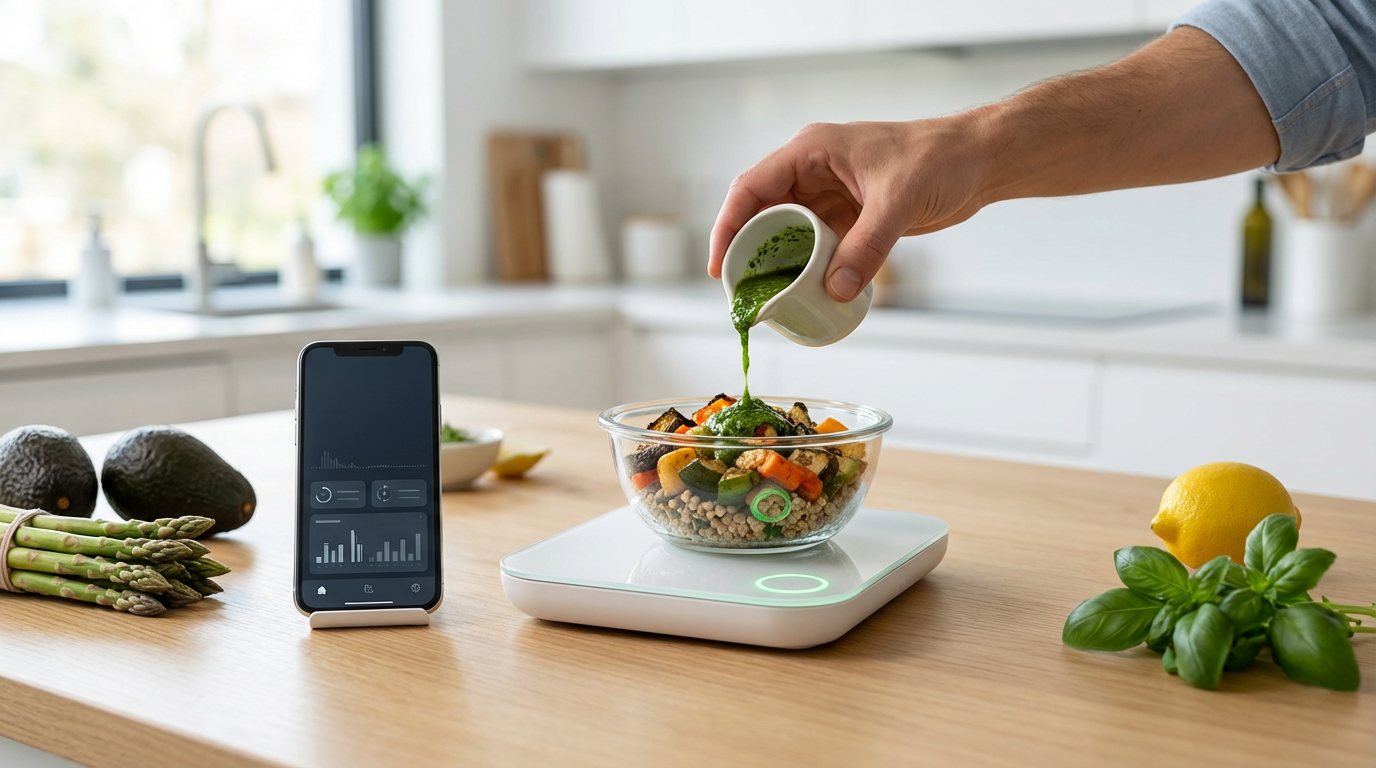
How to Log Mixed Meals Accurately for Better Macro Tracking
How to Log Mixed Meals Accurately for Better Macro Tracking
You've nailed tracking single foods. Chicken breast? Easy. Apple? Done. But then dinner rolls around and you're staring at your homemade stir-fry wondering how on earth you're supposed to log mixed meals accurately.
That perfectly seasoned sauce, those caramelized onions, the oil you cooked everything in – suddenly your simple tracking routine feels impossible. You end up guessing, using generic database entries, or worse, skipping the log entirely.
The truth is, mixed meals and home-cooked recipes are where most people's nutrition tracking falls apart. But they don't have to be. With the right approach, you can track home cooked meals with the same precision as your morning protein shake.
Why Mixed Meals Are So Hard to Track
Mixed dishes present unique challenges that single-ingredient foods don't. When you cook at home, you're dealing with:
Multiple ingredients in varying amounts. That pasta sauce might have 12 different components, each contributing different calories and macros.
Cooking methods that change nutrition. Sautéing vegetables in oil adds significant calories. Reducing a sauce concentrates everything.
Portion estimation nightmares. How much of that casserole is actually on your plate? What percentage is cheese versus vegetables?
Database inconsistencies. Generic entries for "chicken stir-fry" vary wildly between apps, often by hundreds of calories.
These challenges explain why so many people abandon tracking when they start cooking more at home. But accurate tracking is absolutely possible – it just requires a different strategy.
The Foundation: Weigh Everything Before Cooking
The most accurate way to log mixed meals starts before you even turn on the stove. Professional nutritionists and serious macro trackers follow one golden rule: weigh all ingredients in their raw state.
Here's why this matters. A 100g piece of raw chicken breast contains about 165 calories. Cook it, and it might weigh 75g due to water loss, but those 165 calories haven't disappeared. If you weigh after cooking and log 75g of "cooked chicken breast," you'll underestimate your intake.
For mixed meals, this principle becomes even more critical. That sauce reducing on the stove is concentrating calories into a smaller volume. The vegetables releasing water are becoming more calorie-dense per gram.
Your new workflow:
- Place your mixing bowl on a kitchen scale
- Zero the scale
- Add your first ingredient and record the weight
- Zero again, add the second ingredient, record
- Repeat for every single ingredient
Yes, this takes extra time initially. But once you've logged a recipe accurately once, you can reuse it forever.
The Recipe Method: Your Most Powerful Tool
Most nutrition apps offer recipe builders, but few people use them effectively. Here's how to make them work for complex dishes.
Step 1: Create the Complete Recipe
Log every ingredient that goes into your dish, using the raw weights you measured. Don't skip the cooking oil, butter, or that tablespoon of honey. These "small" additions often contribute 20-30% of a dish's total calories.
Step 2: Calculate Total Servings Accurately
This is where most people go wrong. Instead of guessing "this makes 4 servings," weigh your finished dish. If your completed recipe weighs 800g, you can create 8 servings of 100g each, or 4 servings of 200g each.
When you serve yourself, weigh your actual portion. If you take 150g of that 800g recipe, you're eating 1.5 servings according to your log.
Step 3: Account for Cooking Losses
Some water evaporates during cooking, making your finished dish weigh less than the sum of your ingredients. This is normal and doesn't affect calorie accuracy – you're still eating all the calories you logged, just in a more concentrated form.
Qalzy's recipe calculator handles these calculations automatically, adjusting serving sizes based on your actual portion weights.
Mastering Sauce Calorie Counting
Sauces are macro tracking's hidden villain. That "light" drizzle of olive oil? Probably 120 calories. The creamy pasta sauce coating your vegetables? Easily 200+ calories per serving.
For homemade sauces: Use the recipe method above. Make a large batch, weigh the total, and portion it out. A kitchen scale makes this incredibly precise.
For store-bought sauces: The serving size on the label rarely matches what people actually use. Research shows that most people underestimate sauce portions by 30-50%. Weigh your actual serving instead of eyeballing "2 tablespoons."
The sauce separation trick: For dishes where sauce and solid ingredients are mixed together, try this approach. Weigh your total portion, then estimate what percentage is sauce versus other ingredients. It's not perfect, but it's more accurate than ignoring the sauce entirely.
Getting Mixed Meal Macros Right
When tracking macros for fat loss or muscle gain, accuracy matters more than convenience. Here's how to nail the macro breakdown for complex dishes.
Identify your macro-dense ingredients. In most mixed meals, 2-3 ingredients contribute 80% of the macros. Focus your precision there. That chicken and rice in your stir-fry matter more than the bell peppers.
Track oils and fats religiously. Fat contains 9 calories per gram versus 4 for protein and carbs. A small measuring error with oils creates big calorie discrepancies.
Use the 80/20 rule. Perfect accuracy isn't always necessary. If you're precise with your major ingredients and honest about portions, small estimation errors won't derail your progress.
Common Mistakes That Kill Accuracy
After working with thousands of people trying to track nutrition, certain mistakes appear repeatedly:
Using generic database entries. "Homemade lasagna" entries vary by 300+ calories per serving between different apps. Your recipe is unique – treat it that way.
Forgetting cooking additions. That spray oil in the pan, the butter you finished the vegetables with, the splash of wine in the sauce – they all count.
Inconsistent portion sizes. Serving yourself different amounts each time makes it impossible to track accurately. Consistent portions create consistent data.
Weighing cooked ingredients but logging raw values. This creates significant errors. Stay consistent – raw weights with raw database entries, cooked weights with cooked entries.
Ignoring leftovers math. If your recipe makes 6 servings but you only eat 4 before throwing away the rest, you actually ate 4/4 of the edible food, not 4/6 of the original recipe.
Smart Tools Make Everything Easier
While you can log mixed meals accurately with any food scale and tracking app, modern tools make the process dramatically faster.
Qalzy's AI-powered nutrition tracking eliminates most of the tedious manual logging. Place your ingredients on the smart scale, and the app automatically identifies and weighs each item. For complex recipes, this cuts logging time by 70-80%.
The system learns your cooking patterns too. Make that chicken stir-fry a few times, and Qalzy starts suggesting your usual ingredients and portions before you even add them to the scale.
Sample Workflow: Logging a Complex Meal
Let's walk through logging a homemade chicken and vegetable curry with rice:
Before cooking:
- Weigh 200g raw chicken breast → log it
- Weigh 15ml coconut oil → log it
- Weigh 100g onions → log it
- Weigh 150g mixed vegetables → log it
- Measure 200ml coconut milk → log it
- Weigh your spices and curry paste → log them
After cooking:
- Weigh the finished curry (let's say 580g)
- Decide on serving size (maybe 290g = 2 servings)
- Weigh your actual portion when eating
For the rice:
- Weigh 75g dry rice → log it
- Cook it (it'll weigh ~225g cooked)
- Weigh your actual serving
Total logging time with a traditional app: 8-10 minutes. With smart tools like Qalzy: 2-3 minutes.
Making It Sustainable Long-Term
Accurate tracking only works if you can maintain it consistently. Here are strategies that actually stick:
Batch your recipe creation. Spend 30 minutes on Sunday creating recipes for your weekly meal prep. Use them all week without additional logging time.
Focus on your frequent foods. You probably make 10-15 different mixed meals regularly. Get those recipes dialed in perfectly, and you'll cover 80% of your home cooking.
Embrace "good enough" for rare foods. That elaborate dinner you make twice a year doesn't need perfect tracking. Use your best estimation and move on.
Build consistent portions into your cooking. Use the same size containers for meal prep. Serve yourself using the same bowls and plates. Consistency makes tracking automatic.
Check out Qalzy's meal planning features for tools that make batch recipe creation effortless.
When Estimation Is Okay (And When It's Not)
Perfect accuracy isn't always necessary, but knowing when to prioritize precision matters.
Be precise when:
- You're in a fat loss phase with tight calorie targets
- The meal contains high-calorie ingredients (nuts, oils, cheese)
- You eat this dish frequently
- You're troubleshooting a plateau
Estimation is fine when:
- You're in a maintenance or building phase
- The dish is mostly low-calorie vegetables
- It's a rare treat meal
- You're eating out (where precision is impossible anyway)
FAQ
How accurate do I need to be with mixed meal tracking? For fat loss, aim for 85-90% accuracy with your frequent meals. Perfect precision isn't necessary, but consistent methodology is crucial.
Should I weigh ingredients before or after cooking? Always weigh before cooking when possible. Raw weights are more consistent and accurate. If you must weigh after cooking, make sure to use cooked entries in your tracking app.
What's the biggest mistake people make with sauce calories? Underestimating portions. Most people use 2-3x more sauce than they think. A kitchen scale eliminates this guesswork completely.
How do I handle recipes that make different amounts each time? Weigh your finished dish every time and calculate serving sizes based on actual weight, not your original estimate. If today's batch weighs 900g instead of 800g, adjust accordingly.
Is it worth tracking very small ingredients like spices? For pure spices, probably not – they're mostly negligible calories. But spice blends, pastes, and sauces often contain oils and sugars that add up quickly.
How do I track potluck or family-style meals? Estimate as best you can using similar recipes from your app's database, then add 10-15% to account for hidden ingredients you might have missed.
Take the Guesswork Out of Mixed Meal Tracking
Accurate nutrition tracking shouldn't require a food science degree or hours of tedious logging. The strategies above will dramatically improve your mixed meal accuracy, but the right tools make the process effortless.
Qalzy's smart kitchen scale and AI app eliminates most of the manual work while maintaining the precision serious trackers need. Instead of spending 10 minutes logging a complex recipe, spend 2 minutes and get back to enjoying your perfectly tracked homemade meal.
Your nutrition goals are too important to derail over logging frustrations. Master mixed meal tracking, and you'll finally have the accurate data you need to reach your targets – whether that's fat loss, muscle gain, or simply maintaining the healthy lifestyle you've built.