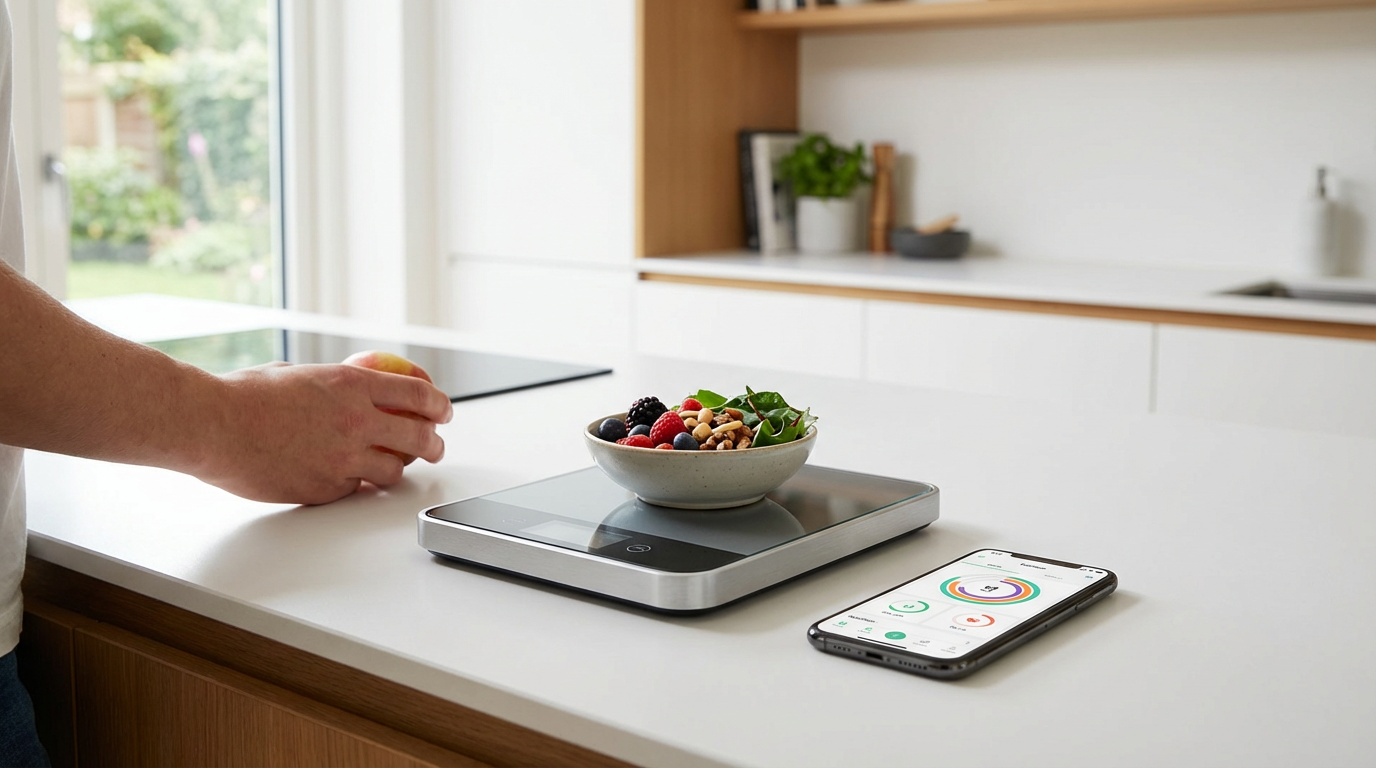
Smart Food Scale With App: What You Can Actually Automate
Smart Food Scale With App: What You Can Actually Automate
You've probably spent countless minutes manually logging every meal into your nutrition app. Searching for foods, adjusting serving sizes, and second-guessing portion estimates. It's tedious work that makes consistent tracking feel like a chore.
A smart food scale with app promises to change that by automating parts of the nutrition tracking process. But what can these devices actually automate, and what still requires your input? Let's cut through the marketing hype and examine what's realistic.
The truth is, smart scales can automate some tasks beautifully while others remain stubbornly manual. Understanding the difference will help you set proper expectations and choose the right tool for your goals.
What Smart Food Scales Actually Automate
Weight Measurement and Data Transfer
This is where smart scales truly shine. Traditional tracking requires you to weigh food, remember the weight, then manually enter it into your app. A bluetooth food scale app eliminates this friction entirely.
The scale automatically sends precise measurements to your phone. No more forgetting whether you weighed 127g or 137g of chicken breast. The data transfers instantly, creating a seamless bridge between your kitchen counter and your nutrition log.
Portion Size Calculations
Once your scale knows what food you're weighing, it can automatically calculate nutrition data for any portion size. Want to know the macros for 73g of almonds instead of the standard 28g serving? The math happens instantly.
This automation saves significant time compared to manual calculations or hunting through serving size options in traditional apps.
Multi-Ingredient Meal Logging
Some advanced systems can log meals from the scale by tracking each ingredient as you add it. You place your bowl on the scale, add rice, tare the scale, add chicken, tare again, then add vegetables.
The scale records each component's weight and calculates total nutrition automatically. This turns complex meal logging into a simple cooking process.
Smart Food Scale With App Integration: The Limits
Food Identification Still Needs Help
Despite impressive advances, most smart scales can't automatically identify what food you're weighing. You still need to tell the app whether those 100g represent broccoli or brownies.
Some newer systems use AI-powered image recognition, but accuracy varies significantly. Chicken breast versus salmon? Usually fine. Different apple varieties? Often confused.
Recipe and Custom Food Creation
While scales excel at weighing ingredients, creating custom recipes or adding new foods to the database typically requires manual input. You'll still spend time entering nutrition information for homemade dishes or specialty products.
The automation helps with the weighing and calculating, but the initial setup often needs human intelligence.
Context and Meal Timing
Smart scales measure what and how much, but they don't know when or why you're eating. Tracking meal timing, hunger levels, or eating contexts still requires manual logging if those factors matter for your goals.
Comparing Smart Kitchen Ecosystem Options
Basic Bluetooth Scales
Entry-level options focus purely on weight transfer. They connect to existing nutrition apps like MyFitnessPal or Cronometer, automating the measurement process while relying on those apps' food databases.
Pros:
- Lower cost
- Works with familiar apps
- Simple setup
Cons:
- Limited automation beyond weight
- Still requires manual food selection
- No advanced features
Integrated Smart Systems
More sophisticated platforms combine smart scales with purpose-built apps designed for seamless integration. These systems can offer features like ingredient-by-ingredient meal building and AI-powered food suggestions.
Qalzy represents this approach, combining an AI-powered scale with an app specifically designed to minimize manual input. The system learns your eating patterns and can suggest likely foods based on context and history.
Pros:
- Deeper automation
- Smarter food suggestions
- Streamlined workflow
Cons:
- Higher initial investment
- Learning curve for new app
- Less flexibility with third-party apps
Real-World Automation Scenarios
The Morning Routine
Imagine your typical breakfast preparation. With a traditional approach, you'd weigh oats, measure milk, add berries, then spend several minutes logging each component separately.
A smart food scale with app integration transforms this into a flowing process. Place your bowl, add oats (weight recorded), tare and add milk (weight recorded), tare and add berries (weight recorded). The app calculates total nutrition automatically.
Total logging time: Under 30 seconds instead of 3-4 minutes.
Meal Prep Efficiency
Batch cooking becomes significantly more efficient when you can weigh and log multiple portions simultaneously. The scale can divide recipe totals by portion count, automatically calculating per-serving nutrition.
This automation particularly benefits people who meal prep for weight loss or those tracking macros precisely.
Common Mistakes With Smart Food Scales
Expecting Complete Automation
The biggest disappointment comes from unrealistic expectations. Smart scales automate measurement and calculation, but they don't eliminate all manual input. You'll still need to identify foods, create custom entries, and make judgment calls about complex dishes.
Ignoring Calibration and Maintenance
Automation only works when measurements are accurate. Neglecting regular calibration or using scales on uneven surfaces undermines the entire system's reliability.
Over-Relying on Food Databases
Even smart systems depend on food database accuracy. Assuming every entry is perfectly correct without spot-checking can lead to tracking errors that compound over time.
Is the Automation Worth It?
For Serious Trackers
If you're tracking macros for bodybuilding, managing a medical condition, or pursuing aggressive fat loss goals, the time savings and accuracy improvements often justify the investment. The automation removes friction from a process you're doing multiple times daily.
For Casual Users
Those who track occasionally or focus on general awareness might find basic apps sufficient. The automation benefits matter most when tracking frequency is high and precision is important.
The Learning Curve Factor
Smart systems typically require 1-2 weeks to learn your preferences and eating patterns. Initial setup takes longer than traditional methods, but efficiency improves dramatically once the system understands your habits.
Choosing Your Smart Kitchen Setup
Consider your specific needs before investing in automation. Do you eat similar foods regularly? Cook at home frequently? Track macros precisely? These factors influence which features matter most.
For people seeking maximum automation with minimal learning curve, integrated solutions like Qalzy's AI-powered system offer the most seamless experience. The scale and app work together to minimize manual input while maintaining accuracy.
Those preferring to stick with existing apps might choose basic bluetooth scales that integrate with their current workflow.
The Future of Food Tracking Automation
Emerging Technologies
Computer vision continues improving, making automatic food identification more reliable. Some experimental systems can distinguish between similar foods and estimate nutrition from photos alone.
Voice integration is becoming more sophisticated, allowing hands-free logging during cooking. Instead of touching your phone with messy hands, you can simply announce what you're adding.
Integration Opportunities
Smart scales are beginning to connect with other kitchen devices, creating comprehensive smart kitchen ecosystems. Imagine your scale communicating with your meal planning app, grocery list, and even your fitness tracker.
Making Smart Scales Work for Your Goals
Success with automated tracking requires matching the tool to your specific situation. If you're working toward weight loss goals, consistent tracking matters more than perfect tracking. Smart scales excel at removing barriers to consistency.
For macro tracking, precision becomes more important. The automation helps maintain accuracy while reducing the mental load of constant calculations.
The key is understanding what you actually need automated versus what sounds impressive in marketing materials.
FAQ
Do smart food scales work with any nutrition app? Basic bluetooth scales often integrate with popular apps like MyFitnessPal, but advanced features usually require specific app partnerships. Check compatibility before purchasing.
How accurate are smart food scales compared to regular digital scales? Accuracy depends on the specific model, but most quality smart scales match or exceed regular digital scales. The advantage is automated data transfer, not necessarily better measurement precision.
Can smart scales identify food automatically? Most cannot reliably identify foods without user input. Some newer models use AI and cameras for food recognition, but accuracy varies significantly depending on the food type.
Do I need Wi-Fi for a smart food scale to work? Bluetooth models work without Wi-Fi, connecting directly to your phone. Wi-Fi models can sync data across devices and work when your phone isn't nearby.
How long do smart food scale batteries typically last? Battery life varies by model and usage, but most last 6-12 months with regular use. Bluetooth connectivity does drain batteries faster than basic digital scales.
Are smart food scales worth it for weight loss? For people who struggle with consistent tracking, the automation can significantly improve adherence. The time savings and reduced friction often justify the cost for serious weight loss efforts.
Ready to Automate Your Nutrition Tracking?
Smart food scales with app integration can genuinely transform your tracking experience, but success depends on choosing the right system for your needs and understanding realistic capabilities.
If you're ready to experience next-level automation, Qalzy's AI-powered scale and app offers one of the most comprehensive solutions available. The system learns your preferences, suggests likely foods, and minimizes manual input while maintaining the accuracy serious trackers demand.
The future of nutrition tracking is about working smarter, not harder. Smart scales represent a significant step toward effortless, accurate food logging that actually fits into real life.
For more nutrition tracking strategies and tools, explore our complete resource library designed to make healthy eating more sustainable and less stressful.