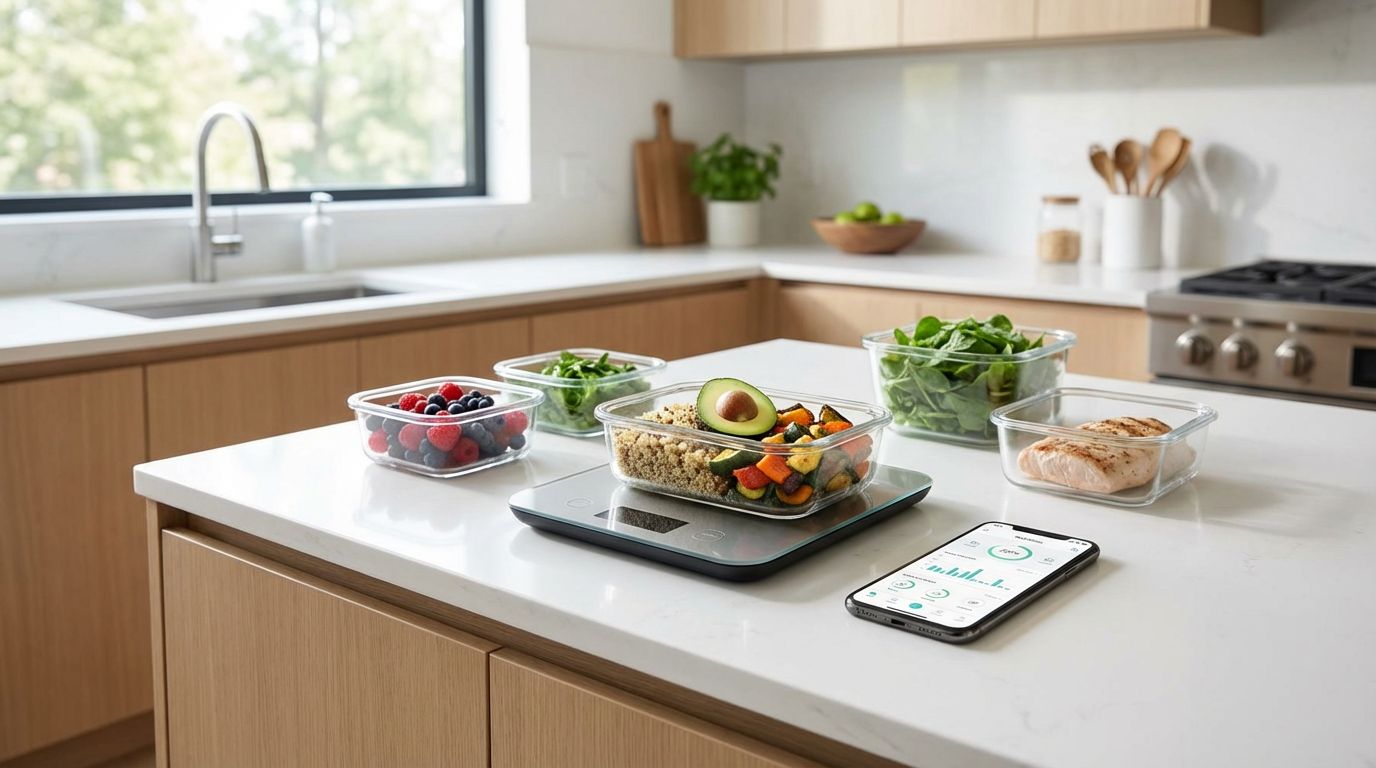
Smart Kitchen Weighing Scale: Your Macro Tracking Game-Changer
Smart Kitchen Weighing Scale: Your Macro Tracking Game-Changer
You've tried logging every bite into apps. You've estimated portions with your hands. You've even attempted to eyeball that "medium" apple for the hundredth time. But if you're serious about tracking macros or hitting specific nutrition goals, you know the struggle is real.
A smart kitchen weighing scale changes everything. Instead of playing guessing games with portion sizes or spending 10 minutes manually entering every ingredient, you get precise measurements and instant nutrition data. No more wondering if that "cup" of oats is actually 40g or 80g – a difference that can throw off your entire day's macros.
Let's explore how these intelligent scales work and why they're becoming essential tools for anyone serious about nutrition tracking.
What Makes a Kitchen Scale "Smart"?
Traditional kitchen scales tell you weight. Smart scales tell you weight plus everything else you actually care about: calories, protein, carbs, fat, fiber, and more.
The magic happens through app connectivity. When you place food on the scale, it identifies what you're weighing (either automatically or through quick selection) and instantly calculates the nutritional breakdown. Some advanced models even learn your eating patterns and can recognize foods you use regularly.
Here's what sets smart scales apart:
- Real-time nutrition data: See macros as you measure
- Recipe tracking: Build and save complete meals with accurate totals
- Portion control: Know exactly what a serving looks like
- Progress monitoring: Track intake patterns over time
- Sync capability: Connect with fitness apps and health platforms
Why Accuracy Matters More Than You Think
Most people underestimate portions by 20-40%. That "tablespoon" of peanut butter? Probably closer to two. That "medium" banana? Could be anything from 90g to 150g.
These small errors compound quickly. If you're trying to maintain a 200-calorie deficit for fat loss, portion estimation errors can easily wipe out your progress without you realizing it.
Consider this scenario: You're making overnight oats. Without a scale, you might estimate:
- 1/2 cup oats (40g)
- 1 tablespoon peanut butter (16g)
- 1 medium banana (100g)
With actual weighing, those portions often become:
- 60g oats (50% more calories)
- 25g peanut butter (56% more calories)
- 130g banana (30% more calories)
That's an extra 150+ calories from "estimation drift" in just one meal.
Smart Kitchen Weighing Scale for Macros: Key Features to Look For
Not all smart scales are created equal. When choosing a smart kitchen weighing scale for macros, prioritize these features:
Database Size and Quality
The scale's nutrition database determines accuracy. Look for scales with comprehensive databases that include:
- Whole foods with multiple varieties
- Brand-name products with barcode scanning
- Restaurant and chain items
- International foods if relevant to your diet
Recognition Technology
Advanced scales use visual recognition or AI to identify foods automatically. This eliminates the tedious step of searching through databases for every ingredient.
Recipe Building and Storage
A good meal prep scale should let you:
- Add multiple ingredients to build complete recipes
- Save favorite meals for quick reuse
- Scale recipes up or down while maintaining accurate ratios
- Track recipes with scale functionality for consistent meal prep
App Integration
Seamless connectivity with popular fitness apps like MyFitnessPal, Cronometer, or dedicated nutrition platforms saves time and prevents double-entry.
Transforming Your Meal Prep Game
Smart scales excel at meal prep because they eliminate the guesswork from batch cooking. Here's how they streamline the process:
Batch Recipe Creation
When making a large batch of chili, curry, or soup, you can weigh each ingredient as you add it. The scale calculates total nutrition for the entire batch, then divides it by your desired number of portions. No more wondering if container #3 has more calories than container #7.
Consistent Portions
Meal prep success depends on consistency. With precise measurements, each prepared meal contains exactly the macros you planned. This consistency is crucial for anyone tracking intake for specific goals.
Time Savings
While the initial recipe building takes a few extra minutes, you save hours throughout the week. Instead of logging individual ingredients for each meal, you simply select your pre-built recipe.
Common Mistakes to Avoid
Even with smart technology, users make predictable errors:
Forgetting to Tare
Always zero out the scale between ingredients. Forgetting to tare means you're weighing the bowl plus the food, throwing off all calculations.
Inconsistent Units
Stick to grams for consistency. Switching between ounces, cups, and grams creates confusion and reduces accuracy.
Ignoring Cooking Losses
Raw chicken breast weighs more than cooked. If your scale's database shows raw values but you're weighing cooked food, your numbers will be off. Choose the correct food state in your app.
Relying Solely on Visual Recognition
While AI recognition is impressive, it's not perfect. Always double-check that the scale identified your food correctly, especially for similar-looking items.
Beyond Basic Tracking: Advanced Applications
Smart scales offer capabilities beyond simple macro tracking:
Micronutrient Monitoring
Track vitamins, minerals, and other nutrients often missing from basic calorie counting. This is particularly valuable for those following restrictive diets or managing health conditions.
Eating Pattern Analysis
Some scales track when and how much you eat, revealing patterns you might not notice. Are you consistently under-eating protein at breakfast? Overdoing fats at dinner? The data tells the story.
Family Nutrition Management
Manage multiple family members' nutrition goals from one device. Track a teenager's bulking diet alongside a parent's fat loss plan, each with personalized targets.
Making the Investment Worth It
A quality smart kitchen weighing scale represents a significant upgrade from basic food tracking methods. The investment pays off through:
- Time savings: Faster, more accurate logging
- Better results: Precise tracking leads to better outcomes
- Reduced frustration: No more guessing or manual calculations
- Long-term habits: Easier tracking encourages consistency
For serious macro trackers, the efficiency gains alone justify the cost. Instead of spending 15-20 minutes per day logging food manually, you can capture the same data in 5 minutes or less.
The Future of Smart Kitchen Technology
As AI technology advances, smart scales are becoming more intuitive and accurate. Features on the horizon include:
- Enhanced visual recognition for complex dishes
- Integration with smart refrigerators and pantry management
- Predictive suggestions based on your goals and preferences
- Real-time coaching and feedback
One standout example is Qalzy, an AI-powered kitchen scale and nutrition app that exemplifies this evolution. By combining precise weighing with intelligent food recognition, Qalzy eliminates much of the tedium associated with traditional macro tracking while maintaining the accuracy serious fitness enthusiasts demand.
Integrating Smart Scales Into Your Routine
Success with any tracking tool depends on building sustainable habits. Start by using your smart scale for one meal per day – perhaps breakfast, which tends to be more routine and predictable.
As you become comfortable with the technology, expand to other meals. Focus on your most frequent recipes first, building a library of go-to meals with known nutrition profiles.
For those new to macro tracking, consider using a macro calculator to establish your baseline targets before diving into precise measurement.
Troubleshooting Common Issues
Even the best smart scales occasionally have hiccups:
Connectivity Problems
Ensure your phone's Bluetooth is enabled and the scale is within range. Most scales need to be relatively close to your device during use.
Inaccurate Food Recognition
If the scale consistently misidentifies certain foods, check if there's a way to train it or manually correct the selection. User feedback often improves recognition over time.
Battery Life
Smart scales drain batteries faster than basic models due to connectivity features. Keep spare batteries on hand or choose models with rechargeable options.
Frequently Asked Questions
Do I need a smart scale if I already use a nutrition app? Smart scales complement nutrition apps by providing accurate weights and automating data entry. While apps are great for tracking, they rely on your portion estimates, which are often inaccurate.
Can smart scales recognize all foods automatically? Recognition varies by model and manufacturer. Most handle common whole foods well but may struggle with complex dishes or unusual ingredients. Manual selection is always available as a backup.
Are smart scales accurate enough for serious macro tracking? Yes, quality smart scales are typically accurate to within 1-2 grams, which is more than sufficient for nutrition tracking. The nutrition databases are usually as accurate as those in dedicated tracking apps.
How do smart scales handle recipes with multiple ingredients? Most allow you to add ingredients one by one, calculating cumulative nutrition data. You can then save the complete recipe for future use and portion it according to your needs.
Do I need an internet connection to use a smart scale? Most require initial setup and periodic syncing with internet connectivity, but many can function offline for basic weighing and nutrition lookup using cached data.
Can multiple people use the same smart scale? Yes, most scales support multiple user profiles through their companion apps, allowing family members to track their individual nutrition goals separately.
Taking the Next Step
If you're tired of guessing portions and spending endless time on manual food logging, a smart kitchen weighing scale might be the upgrade your nutrition routine needs. The combination of precision, convenience, and comprehensive tracking capabilities makes these tools invaluable for anyone serious about their health goals.
For those ready to experience the difference intelligent tracking can make, Qalzy's AI-powered approach represents the cutting edge of kitchen scale technology. By eliminating the tedious aspects of macro tracking while maintaining scientific accuracy, tools like these make sustainable nutrition habits more achievable than ever.
The question isn't whether smart scales work – it's whether you're ready to stop guessing and start knowing exactly what you're eating. Your future self, standing on the bathroom scale or looking in the mirror, will thank you for making the switch.
Explore more nutrition strategies and recipes in our comprehensive cookbook or dive deeper into health and wellness topics in our blog.