A Smarter Way to Track Calories Without the Guesswork
A Smarter Way to Track Calories Without the Guesswork
You know the drill. Open MyFitnessPal. Search for "chicken breast." Scroll through 47 different entries. Wonder if yours is raw or cooked. Guess the weight. Close the app feeling frustrated.
Sound familiar?
If you're tired of the endless searching, weighing, and guessing that comes with traditional calorie tracking, you're not alone. The good news? There's a smarter way to track calories that eliminates most of the tedious work while giving you better accuracy.
Let's explore why the old methods fall short and what modern solutions can do for your nutrition goals.
Why Traditional Calorie Tracking Falls Short
MyFitnessPal revolutionized nutrition tracking when it launched. But after years of using it, many people hit the same walls:
Database chaos. With millions of user-submitted entries, finding the right food becomes a guessing game. Is "Chicken Breast - Grilled" the same as yours? Who knows.
Time drain. The average person spends 23 minutes per day logging food. That's nearly 3 hours per week just entering data.
Accuracy issues. Eyeballing portions leads to tracking errors of 20-40%, according to nutrition research. Your "medium banana" might be someone else's large.
Motivation killer. When logging feels like homework, people quit. Studies show 80% of users abandon food tracking apps within six months.
The fundamental problem? These apps were built for data entry, not real-world cooking and eating.
What Makes Calorie Tracking "Smart"?
A truly smarter way to track calories should eliminate three main friction points:
1. Recognition Over Search
Instead of hunting through databases, smart systems recognize what you're eating. This might mean:
- Visual food recognition through your phone camera
- Smart scales that identify ingredients automatically
- Integration with grocery receipts or meal delivery services
2. Automatic Portion Measurement
No more guessing cup sizes or eyeballing weights. Smart tracking measures portions precisely without you thinking about it.
3. Learning Your Patterns
Intelligent systems learn your eating habits and preferences, making logging faster over time. They remember your usual coffee order, your go-to lunch, and your preferred brands.
Modern Alternatives to Traditional Food Logging
AI-Powered Kitchen Scales
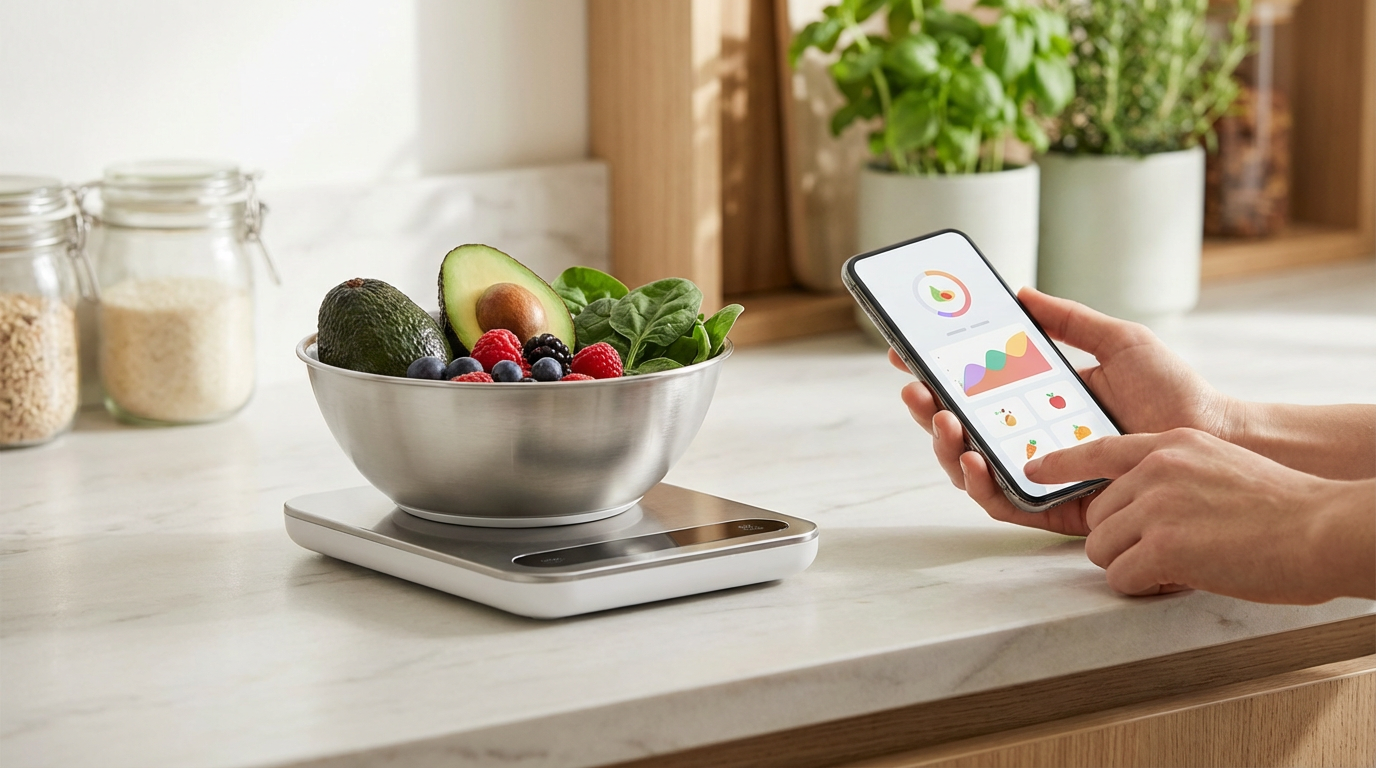
Smart kitchen scales represent one of the biggest innovations in nutrition tracking apps. These devices combine precise weight measurement with food recognition technology.
Here's how they work: Place your food on the scale, and AI identifies what it is. The scale measures the exact weight while the app automatically logs calories and macros. No searching, no guessing, no manual entry.
Qalzy's AI kitchen scale exemplifies this approach. It recognizes thousands of foods instantly and syncs nutrition data to your phone. What used to take 2-3 minutes now happens in seconds.
Photo-Based Tracking
Several apps now use computer vision to analyze food photos. You snap a picture of your meal, and AI estimates calories and macros.
The accuracy has improved dramatically. Modern photo recognition can identify specific foods, estimate portions, and even account for cooking methods.
Pros:
- Super quick logging
- Works anywhere
- No additional hardware needed
Cons:
- Less accurate than weighing
- Struggles with mixed dishes
- Lighting affects recognition
Voice-Activated Logging
Some newer apps let you speak your meals instead of typing them. "I ate two eggs, one slice of toast, and a banana" gets automatically converted to nutrition data.
This works especially well for simple meals and snacks, though complex recipes still require more detailed input.
Smart Meal Planning Integration
The smartest tracking happens when you plan ahead. Apps that combine meal planning with automatic logging eliminate most daily friction.
You plan your meals once, and the app tracks everything automatically as you eat. Qalzy's meal planning features work this way, turning your planned recipes into automatic nutrition logs.
The Science Behind Accurate Calorie Tracking
Accuracy matters more than convenience for achieving your goals. Research shows that people typically underestimate their calorie intake by 20-40%.
The most accurate calorie tracking without guesswork combines:
Precise measurement. Digital scales accurate to 1-gram increments beat volume measurements every time. A "cup" of rice can vary by 50+ calories depending on how you scoop it.
Verified databases. Professional nutrition databases (like USDA's) provide more reliable data than crowdsourced entries.
Consistency. Tracking the same way every time reduces variability, even if your method isn't perfect.
Context awareness. Smart systems account for cooking methods, preparation styles, and ingredient variations that affect nutrition content.
Common Mistakes That Kill Tracking Accuracy
Even with smart tools, certain habits undermine your progress:
Inconsistent Timing
Logging meals hours later leads to forgotten ingredients and estimated portions. The best tracking happens in real-time or immediately before eating.
Ignoring Cooking Oils and Condiments
That tablespoon of olive oil adds 120 calories. The mayo on your sandwich adds another 100. These "small" additions compound quickly.
Weekend Blind Spots
Many people track perfectly Monday through Friday, then ignore weekends. But Saturday and Sunday calories count just as much for your weekly total.
Over-Relying on Exercise Adjustments
Fitness trackers notoriously overestimate calorie burn. If you're eating back all your "exercise calories," you might be creating a surplus instead of a deficit.
Choosing the Right Tracking Method for Your Lifestyle
The best system is the one you'll actually use consistently. Consider these factors:
Cooking frequency. If you cook most meals at home, an AI kitchen scale provides maximum accuracy with minimal effort. Restaurant meals work better with photo-based tracking.
Tech comfort. Some people love gadgets; others prefer simple apps. Choose tools that match your preferences, not the latest trends.
Precision needs. Competitive athletes might need gram-level accuracy. Someone wanting to lose 20 pounds can succeed with less precise methods.
Time availability. If you have 30 seconds per meal for tracking, prioritize speed over detailed logging.
Real-World Example: A Day of Smart Tracking
Let's compare traditional logging with smart tracking for a typical day:
Traditional method:
- Breakfast: 8 minutes searching and logging oatmeal, berries, and protein powder
- Lunch: 5 minutes entering salad ingredients one by one
- Dinner: 12 minutes calculating homemade stir-fry portions
- Snacks: 6 minutes logging throughout the day
- Total time: 31 minutes
Smart tracking with AI scale:
- Breakfast: 30 seconds (scale recognizes and weighs everything automatically)
- Lunch: 45 seconds (pre-planned meal logs automatically)
- Dinner: 2 minutes (scale handles multiple ingredients simultaneously)
- Snacks: 1 minute total
- Total time: 4 minutes 15 seconds
The smart method saves over 25 minutes while improving accuracy.
Making the Transition: Tips for Success
Start Simple
Don't try to revolutionize your entire tracking system overnight. Pick one smart tool and integrate it gradually.
Keep Backup Methods
Smart tools work great 90% of the time. Have a simple backup plan for restaurants, travel, or technical issues.
Focus on Consistency Over Perfection
A "good enough" system used daily beats a perfect system used sporadically. Track consistently for two weeks before optimizing your approach.
Use Your Data
The point isn't just collecting numbers—it's understanding your patterns. Review your weekly averages and trends, not just daily totals.
The Future of Nutrition Tracking
We're moving toward completely passive tracking. Future innovations might include:
- Smart plates that weigh and identify food automatically
- Wearable devices that detect eating through jaw movement
- Integration with smart refrigerators and grocery apps
- Continuous glucose monitoring for real-time metabolic feedback
The goal remains the same: accurate nutrition data without manual effort.
Finding Your Smarter Way to Track Calories
The best tracking system disappears into the background of your life. It captures accurate data without disrupting your meals, relationships, or schedule.
For many people, that means moving beyond traditional apps toward AI-powered solutions. Qalzy's smart scale and app represents this evolution—combining precision measurement with intelligent food recognition to make tracking nearly effortless.
The key is finding tools that match your lifestyle while maintaining the accuracy you need for your goals. Whether that's an AI kitchen scale, photo-based tracking, or a hybrid approach, the right system will feel natural rather than burdensome.
Frequently Asked Questions
How accurate are AI-powered food tracking tools compared to manual logging? AI tools typically achieve 90-95% accuracy when measuring whole foods, compared to 60-80% accuracy with manual estimation. The precision comes from exact weight measurement combined with verified nutrition databases.
Can smart tracking tools handle homemade recipes and complex meals? Yes, advanced systems can recognize multiple ingredients simultaneously and calculate nutrition for mixed dishes. Some tools even learn your common recipes over time.
What happens if the AI doesn't recognize my food? Most smart systems include manual override options. You can correct misidentified foods, and the AI learns from these corrections to improve future recognition.
Are MyFitnessPal alternatives worth the cost? If you're spending 20+ minutes daily on food logging, smart tools typically pay for themselves in time savings within a few months. The improved accuracy often leads to better results too.
Do I need to track calories forever to maintain my weight? Many people find they can maintain results with periodic tracking rather than daily logging. Smart tools make it easier to "check in" with your nutrition when needed.
How do smart tracking tools work when eating out? Most combine multiple approaches—photo recognition for restaurant meals, barcode scanning for packaged foods, and precise weighing for home cooking. The key is having options for different situations.
Take the Next Step
Ready to move beyond endless food database searches and portion guesswork? Explore Qalzy's AI-powered nutrition tracking to see how smart technology can transform your approach to calories and macros.
The smarter way to track calories isn't about perfection—it's about consistency, accuracy, and sustainability. Find the tools that work for your life, and let technology handle the tedious parts while you focus on your health goals.
For more nutrition insights and tracking strategies, check out Qalzy's blog for practical tips that actually work in real life.