How to Make Sustainable Calorie Tracking Work Long-Term
How to Make Sustainable Calorie Tracking Work Long-Term
You've downloaded the app, logged your meals religiously for two weeks, and then... life happened. Sound familiar?
Most people abandon calorie tracking within a month. Not because it doesn't work, but because traditional methods feel like a part-time job. The endless searching through databases, estimating portions, and typing in every ingredient gets old fast.
But here's the thing: sustainable calorie tracking doesn't have to be perfect to be effective. When done right, it becomes a natural habit that supports your goals without consuming your life.
Let's explore how to make weight loss tracking actually stick.
Why Most Calorie Tracking Fails
The problem isn't with calorie tracking itself—it's with how we approach it.
Traditional calorie counting treats every meal like a math problem. You measure, search, log, and calculate. For a simple breakfast, you might spend 10 minutes just entering data. Multiply that by three meals and snacks, and you're looking at serious time investment.
This all-or-nothing approach creates a cycle:
- Week 1: Perfect logging, high motivation
- Week 2: Still good, but getting tedious
- Week 3: Skip a few meals, feel guilty
- Week 4: Give up entirely
The solution isn't to track harder—it's to track smarter.
The Foundation of Sustainable Calorie Tracking
Start with Your "Why"
Before diving into apps and strategies, get clear on your goal. Are you trying to lose weight? Maintain your current weight? Build muscle? Your approach should match your objective.
For long term fat loss, you need a consistent calorie deficit. But that deficit doesn't need to be perfect every single day. Weekly averages matter more than daily precision.
Choose Your Tracking Intensity
Not everyone needs the same level of detail. Pick the approach that fits your lifestyle:
Light Tracking: Focus on portions and general awareness Moderate Tracking: Log main meals, estimate snacks Detailed Tracking: Weigh and log everything
Most people succeed with moderate tracking. You get enough data to make informed decisions without the mental overhead of perfection.
Smart Strategies for Easy Calorie Counting
1. Batch Your Food Prep
Cooking similar meals throughout the week dramatically reduces logging time. When you make a big batch of chicken, rice, and vegetables on Sunday, you only need to calculate the calories once.
Create 3-4 "go-to" meals for each part of your day. Your breakfast rotation might include:
- Greek yogurt with berries and granola
- Scrambled eggs with toast
- Overnight oats with protein powder
Once these are saved in your tracking app, logging becomes a simple tap.
2. Use the 80/20 Rule
Track your main meals with precision, but don't stress about every condiment or small snack. The calories in your breakfast, lunch, and dinner represent about 80% of your daily intake. Get those right, and you're most of the way there.
3. Focus on Calorie-Dense Foods
A cup of lettuce has 10 calories. A tablespoon of olive oil has 120. Guess which one matters more for your tracking?
Pay attention to:
- Cooking oils and butter
- Nuts and seeds
- Cheese and dairy
- Sauces and dressings
These foods pack a lot of calories into small portions, so small measurement errors can throw off your entire day.
4. Learn Your Portion Sizes
You don't need a food scale forever. After a few weeks of measuring, you'll develop an eye for portions. A palm-sized piece of chicken is roughly 4 ounces. A cupped handful of rice is about half a cup.
This skill becomes invaluable when eating out or traveling.
Building Calorie Deficit Habits That Stick
Make It Routine
The most sustainable calorie tracking happens at consistent times. Many people find success logging their entire day in the morning. You plan your meals, enter them once, and then just eat according to plan.
Others prefer logging right before each meal. Find what works for your schedule and stick with it.
Use Technology Wisely
Modern apps have features that can slash your logging time:
- Barcode scanning for packaged foods
- Recipe importers for home cooking
- Recent foods lists for quick access
- Meal copying for similar days
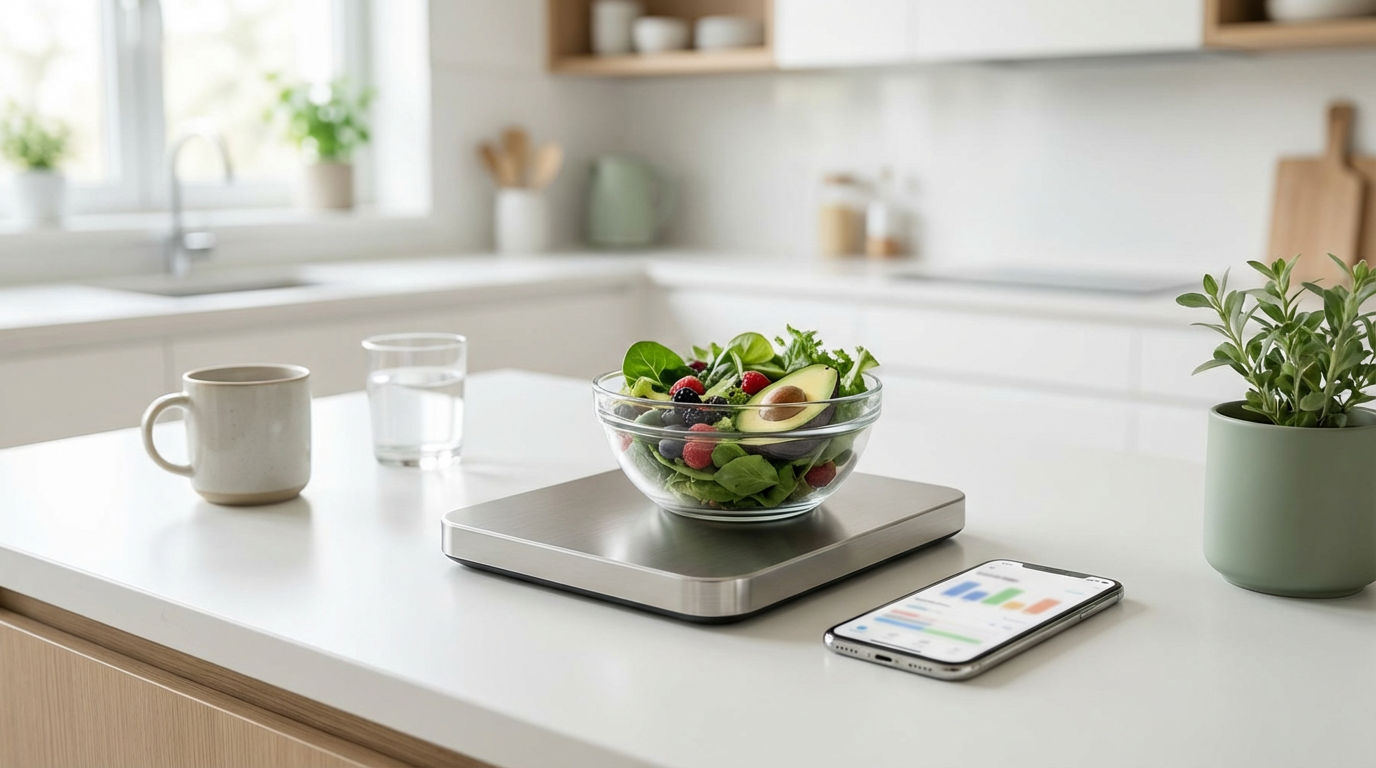
Some tools go even further. Smart kitchen scales with AI recognition can identify foods automatically and sync nutrition data to your phone, eliminating the search-and-type process entirely.
Track Trends, Not Perfection
Your goal isn't to hit exactly 1,847 calories every day. It's to maintain awareness and stay roughly within your target range.
If you're aiming for 1,800 calories daily, anywhere from 1,700-1,900 counts as success. This flexibility makes the process much more forgiving.
Common Sustainable Calorie Tracking Mistakes
Mistake 1: All-or-Nothing Thinking
Missing one meal's worth of logging doesn't ruin your progress. Many people quit entirely after a few imperfect days. Instead, just pick up where you left off.
Mistake 2: Ignoring Liquid Calories
That morning latte, afternoon smoothie, and evening glass of wine can easily add 400-500 calories to your day. Track beverages just like food.
Mistake 3: Not Adjusting Over Time
As you lose weight, your calorie needs decrease. What worked for the first 10 pounds might not work for the next 10. Use a reliable calculator to reassess your targets every 4-6 weeks.
Mistake 4: Forgetting About Weekends
Weekend calories count too. You don't have to be perfect, but completely abandoning tracking Friday through Sunday can undo your weekly progress.
Making Weight Loss Tracking Social
Accountability helps with consistency. Share your goals with family or friends who can support your efforts. When people around you understand what you're working toward, they're more likely to help rather than sabotage.
Some apps offer social features where you can connect with others on similar journeys. Seeing that other people face the same challenges can be motivating.
When to Take Breaks
Sustainable doesn't mean forever without stopping. Sometimes life gets overwhelming, and adding food tracking to your mental load isn't helpful.
It's okay to take planned breaks during:
- Major life changes (new job, moving, family events)
- Vacations or holidays
- Periods of high stress
The key is making these conscious decisions rather than just drifting away from tracking.
Advanced Tips for Long-Term Success
Automate Where Possible
Look for ways to reduce the friction in tracking. Tools like Qalzy's AI-powered kitchen scale can recognize foods automatically and sync nutrition data to your phone, making the logging process nearly effortless.
Focus on Patterns
After a few weeks of tracking, you'll notice patterns. Maybe you consistently overeat on Thursdays due to work stress. Or perhaps you undereat protein at breakfast. Use this data to make targeted improvements.
Celebrate Small Wins
Tracked all your meals for a week? That's worth celebrating. Hit your calorie target five days out of seven? Also a win. Acknowledging progress keeps you motivated for the long haul.
Sample Day: Sustainable Tracking in Action
Morning (2 minutes): Log planned meals for the day while drinking coffee
Breakfast: Greek yogurt bowl (already saved as "usual breakfast" in app)
Lunch: Leftover chicken stir-fry (batch cooked on Sunday, calories already calculated)
Afternoon: Apple with peanut butter (quick barcode scan for the PB)
Dinner: Grilled salmon with roasted vegetables (simple ingredients, easy to log)
Evening: Small piece of dark chocolate (pre-portioned, calories known)
Total logging time: Under 5 minutes for the entire day
Technology That Actually Helps
The right tools can transform tracking from a chore into a quick habit. Look for:
- Speed: How quickly can you log a typical meal?
- Accuracy: Does the database have reliable nutrition data?
- Convenience: Can you access it easily throughout your day?
Smart kitchen tools are making this even easier. Instead of manually searching and logging every ingredient, AI-powered scales can identify foods by sight and automatically sync nutrition data to your phone. This removes the biggest friction point in traditional calorie tracking.
Explore smart tracking tools that can cut your logging time in half while improving accuracy.
Frequently Asked Questions
How accurate does my calorie tracking need to be?
For weight loss, being within 100-200 calories of your target is usually sufficient. Perfect accuracy isn't necessary—consistency matters more than precision.
Should I track calories on weekends?
Yes, but you can be more flexible. Many people successfully maintain their weight loss by tracking loosely on weekends while staying more precise during weekdays.
What if I eat out frequently?
Most restaurant chains provide nutrition information online. For local restaurants, estimate based on similar dishes from chains or focus on controlling portions rather than exact calories.
How long should I track calories?
This varies by person and goal. Some people track for a few months to learn portion sizes and eating patterns, then transition to intuitive eating. Others prefer to track long-term for continued awareness.
Can I lose weight without tracking every single thing?
Absolutely. Many people succeed with partial tracking—logging main meals while estimating snacks, or tracking during weekdays only. Find the level of detail that works for your lifestyle.
What's the biggest mistake people make with calorie tracking?
Trying to be perfect from day one. Start with tracking just your main meals, then gradually add more detail as the habit becomes natural.
Making It Work for You
Sustainable calorie tracking isn't about finding the perfect system—it's about finding the system that works for your life. Maybe that's logging everything meticulously. Maybe it's tracking main meals and estimating the rest. Maybe it's using smart tools that automate most of the work.
The best approach is the one you'll actually stick with for months, not days.
If you're ready to make tracking easier and more sustainable, check out how Qalzy's smart scale and app can streamline your nutrition tracking without sacrificing accuracy. Sometimes the right tool makes all the difference between short-term effort and long-term success.
Remember: sustainable calorie tracking is a skill, not a talent. With the right approach and tools, anyone can make it work long-term.