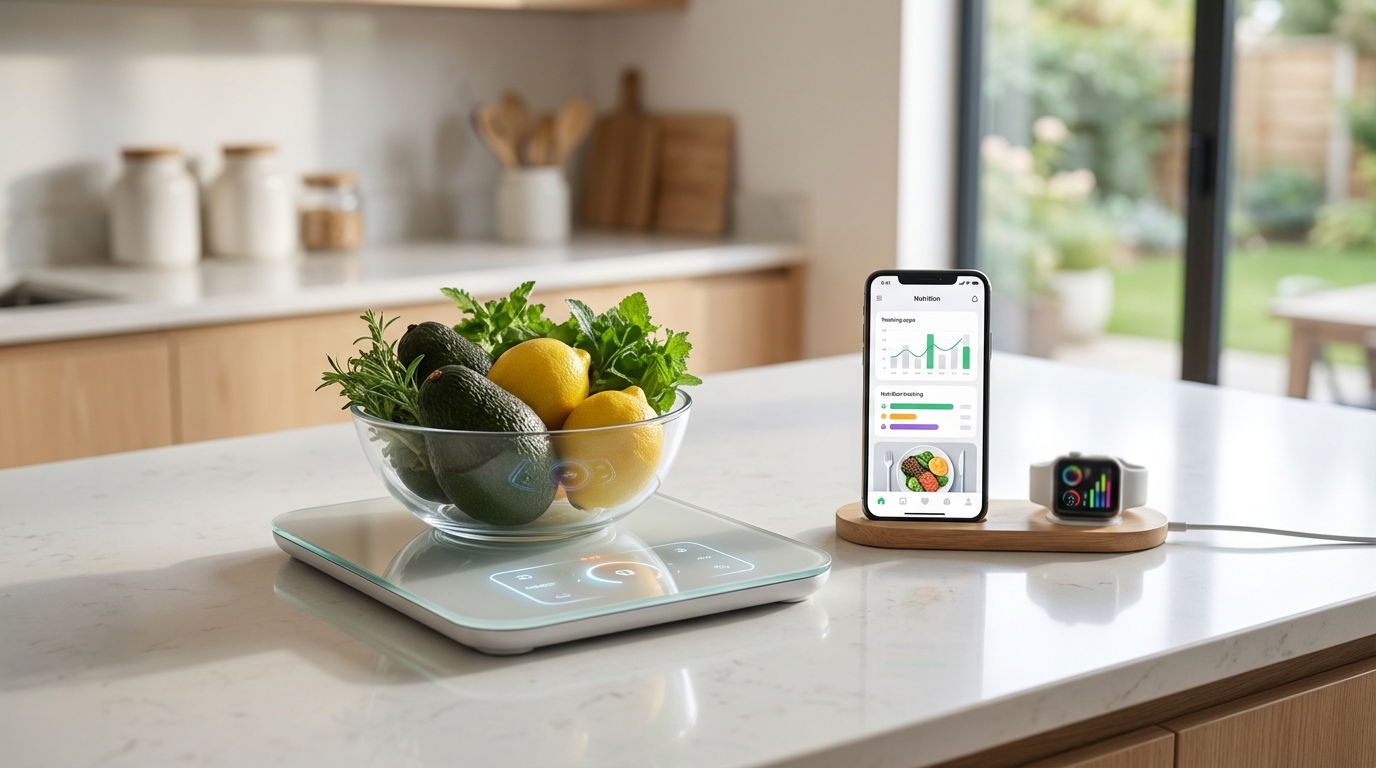
TDEE Calculator Online vs Wearables: Which to Trust?
TDEE Calculator Online vs Wearables: Which Number Should You Trust?
You punch your stats into three different sources and get three wildly different daily calorie targets. Your Fitbit says 2,400 calories. That tdee calculator online spits out 2,150. Your fancy smart scale insists you need 2,650.
Which one's right? And more importantly, which number should you actually use to lose fat or maintain your weight?
The truth is messier than most people realize. Each method has serious strengths and glaring blind spots. Understanding these differences will save you weeks of frustration and help you pick the approach that actually works for your situation.
What TDEE Actually Means (And Why It's So Hard to Pin Down)
TDEE stands for Total Daily Energy Expenditure. It's the total calories your body burns in 24 hours, including everything from breathing to that morning jog.
But here's the problem: your TDEE isn't a fixed number. It fluctuates based on sleep quality, stress levels, how much you moved yesterday, what you ate, and dozens of other variables.
That "perfect" TDEE you're chasing? It's more like a moving target in fog.
How Online TDEE Calculators Work
Most tdee calculator online tools use established formulas like Harris-Benedict or Mifflin-St Jeor. You input your age, gender, height, weight, and activity level. The calculator crunches these numbers and delivers your estimated daily calorie burn.
These formulas were developed using large population studies. They work reasonably well for the average person but can miss the mark significantly for individuals.
The Math Behind Online Calculators
The Mifflin-St Jeor equation (considered most accurate by many dietitians) looks like this:
For men: (10 × weight in kg) + (6.25 × height in cm) - (5 ×
age) + 5
For women: (10 × weight in kg) + (6.25 × height
in cm) - (5 × age) - 161
Then you multiply by an activity factor ranging from 1.2 (sedentary) to 1.9 (extremely active).
Simple, standardized, but based on population averages that might not reflect your unique metabolism.
How Wearables Calculate Your Daily Burn
Fitbits, Apple Watches, and similar devices take a completely different approach. They measure your actual movement throughout the day using accelerometers, heart rate sensors, and sometimes even skin temperature.
These devices start with your basal metabolic rate (calculated similarly to online tools) then add calories based on detected activity. Every step, elevated heart rate, and movement pattern gets factored into your daily total.
What Wearables Get Right
Wearables excel at capturing real-world activity variations. Had a restless night? Took extra walks? Spent the day pacing during phone calls? Your device notices and adjusts accordingly.
This dynamic tracking often provides more personalized estimates than static online calculators.
Where Wearables Fall Short
Heart rate doesn't always correlate perfectly with calorie burn. Factors like caffeine, stress, medications, and individual cardiovascular fitness can throw off the calculations.
Wearables also struggle with resistance training, where your heart rate might not spike dramatically but you're still burning significant calories.
Smart Scales and AI: The New Players
Smart scales measure body composition using bioelectrical impedance. Some newer models claim to calculate TDEE based on your muscle mass, body fat percentage, and other metrics.
The theory makes sense: more muscle tissue burns more calories at rest. Someone with 25% body fat should have a different TDEE than someone with 15% body fat, even at the same weight.
Smart Scale Calorie Recommendations: Promise vs Reality
While body composition does influence metabolism, most consumer-grade smart scales aren't accurate enough for precise TDEE calculations. The bioelectrical impedance technology can be thrown off by hydration levels, recent meals, and even the temperature of your feet.
These smart scale calorie recommendations might be more sophisticated than basic online calculators, but they're built on measurements that can vary significantly day to day.
TDEE Calculator Online Accuracy: The Research
Studies comparing calculated vs measured TDEE show online calculators are typically within 10-15% for most people. That sounds reasonable until you realize a 15% error on a 2,000-calorie TDEE means being off by 300 calories daily.
Over a month, that's nearly 9,000 calories – enough to gain or lose 2.5 pounds even if you're following your plan perfectly.
The National Institutes of Health notes that individual metabolic rates can vary by 20% or more from calculated estimates, even among people with identical stats.
Online TDEE vs Wearables: Head-to-Head Comparison
Accuracy for Different Activities
Cardio and walking: Wearables usually win. They capture the actual intensity and duration of your workout.
Strength training: Online calculators might be more consistent. Wearables often underestimate the calorie burn from lifting weights.
Daily life activities: Wearables excel here. Cleaning house, playing with kids, or having a fidgety day all get captured.
Rest days: Both methods should give similar numbers, but wearables might account for variations in sleep quality and recovery.
Consistency vs Personalization
Online calculators give you the same number every day (until you update your weight). This consistency can be helpful for meal planning and creating sustainable habits.
Wearables provide daily variations that might be more accurate but can also be confusing. Should you eat 2,200 calories today because your watch says you burned more, or stick to a consistent target?
Which TDEE Number to Trust: A Practical Framework
Start with Online, Adjust with Real Data
Use a reputable tdee calculator online as your baseline. Track your weight and measurements for 2-3 weeks while eating at that calorie level.
If you're losing weight faster than expected, your actual TDEE is probably higher. Losing slower? Your TDEE might be lower than calculated.
Use Wearables for Trends, Not Daily Decisions
Your fitness tracker's daily calorie burn might fluctuate wildly, but the weekly averages often provide valuable insights. Look for patterns rather than obsessing over daily variations.
Consider Your Goals and Lifestyle
For fat loss: Start conservative. Use the lower estimate between your online calculator and wearable average. You can always increase calories if you're losing too quickly.
For maintenance: Average the estimates and monitor your weight trend over several weeks.
For muscle gain: Use the higher estimate, but track body composition changes, not just scale weight.
Common TDEE Calculation Mistakes
Overestimating Activity Level
Most people select "moderately active" or higher on online calculators, but unless you're exercising 4-5 times per week consistently, "lightly active" is probably more accurate.
Ignoring Non-Exercise Activity
Your job, commute, and daily habits matter enormously. A teacher who's on their feet all day has a very different TDEE than someone with a desk job, even if they do the same formal workouts.
Treating TDEE as Gospel
Your calculated or measured TDEE is a starting point, not a final answer. Successful fat loss and weight management require adjusting based on real results over time.
Not Accounting for Metabolic Adaptation
As you lose weight, your TDEE decreases. The calculator that was accurate at 180 pounds won't be accurate at 160 pounds.
Making TDEE Work in Real Life
The most successful approach combines multiple data sources with consistent tracking of actual results.
Start with your best TDEE estimate, but pay more attention to what happens when you eat at that level for several weeks. Your body will tell you if the number is right through changes in weight, energy, and performance.
This is where accurate food tracking becomes crucial. You can't evaluate whether your TDEE estimate is correct if you don't know how many calories you're actually consuming.
Traditional calorie logging apps require you to weigh foods, search databases, and manually enter everything. It's time-consuming and prone to errors. Qalzy's AI-powered approach eliminates much of this friction by automatically recognizing foods and calculating portions when you place them on the smart scale.
With more accurate intake data, you can quickly identify whether your TDEE estimate needs adjustment based on your actual results.
The Bottom Line: Which Number Should You Trust?
None of them completely. And all of them partially.
Your best bet is using online calculators for your initial estimate, wearables for activity insights, and real-world results for ongoing adjustments.
The "perfect" TDEE number matters less than consistency in tracking and willingness to adjust based on what actually happens to your body.
Remember: the goal isn't to find the most accurate TDEE calculator. It's to find a sustainable approach that helps you reach your health goals without driving yourself crazy with numbers.
Start somewhere reasonable, track consistently, and adjust based on results. That's how you build a nutrition approach that actually works long-term.
Whether you're using Qalzy's nutrition calculator or any other tool, the key is turning those numbers into consistent daily habits that move you toward your goals.
Frequently Asked Questions
How accurate are online TDEE calculators compared to wearables?
Online calculators are typically within 10-15% for most people, while wearables can vary widely in accuracy depending on the activity type. Neither is perfect, but both provide useful starting points.
Should I eat back the calories my fitness tracker says I burned?
Not necessarily. Wearables often overestimate exercise calories. If fat loss is your goal, consider exercise calories a bonus rather than permission to eat more.
Why do different TDEE calculators give me different numbers?
Different calculators use different formulas (Harris-Benedict, Mifflin-St Jeor, Katch-McArdle) and activity multipliers. Variations of 200-300 calories between calculators are common.
How often should I recalculate my TDEE?
Recalculate whenever you lose or gain 10+ pounds, or if your activity level changes significantly. Your TDEE isn't static.
Can smart scales accurately predict my daily calorie needs?
Current consumer smart scales aren't accurate enough for precise TDEE calculations. They can provide useful trends for body composition, but shouldn't be your primary TDEE source.
What's the best way to determine my actual TDEE?
Track your food intake and weight changes over 3-4 weeks. If you're eating 2,000 calories daily and maintaining weight, your TDEE is approximately 2,000 calories. Adjust from there based on your goals.