Track Calories as a Busy Parent: Stress-Free Dinner Tips
How to Track Calories as a Busy Parent Without Making Dinner More Stressful
You're already juggling soccer practice, homework help, and a full-time job. The last thing you need is to spend 20 minutes after dinner logging every ingredient from tonight's pasta sauce into a calorie tracking app.
Yet here you are, trying to lose those stubborn 15 pounds or maintain your current weight, knowing that tracking your food intake actually works. The problem? Traditional calorie counting feels impossible when you're cooking for a family of four and barely have time to eat your own meal while it's still warm.
The good news is you can absolutely track calories as a busy parent without turning dinner prep into a mathematical nightmare. It just requires a different approach than the detailed logging methods you see fitness influencers using.
Why Traditional Calorie Tracking Fails Busy Parents
Most calorie tracking advice assumes you have time to weigh every ingredient, search databases for exact matches, and input detailed recipes. When you're making dinner for multiple people with different preferences, this approach breaks down fast.
Here's what typically happens: You start strong on Monday, logging everything perfectly. By Wednesday, you're estimating portion sizes. By Friday, you've given up entirely because you made a casserole with 12 ingredients and can't face the data entry marathon.
The solution isn't to abandon tracking altogether. It's to use strategies that work with your reality, not against it.
Smart Strategies for Family Meal Calorie Tracking
Focus on Your Plate, Not the Recipe
Instead of calculating calories for the entire family meal, focus on tracking just your portion. This cuts your logging time by 75% while still giving you the data you need.
When you make spaghetti with meat sauce, you don't need to log the entire pot. Log your serving of pasta, your portion of sauce, and any sides you ate. Let the kids' dinosaur nuggets remain untracked.
Use the "Big Three" Method
For quick food logging, focus on the three highest-calorie components of your meal:
- The protein (chicken breast, ground beef, salmon)
- The carb base (rice, pasta, bread, potatoes)
- Any added fats (oil used in cooking, cheese, nuts, dressing)
Vegetables are important nutritionally, but they won't make or break your calorie goals. A cup of broccoli has 25 calories. A tablespoon of olive oil has 120. Focus your tracking energy where it matters most.
Batch Your Tracking Time
Instead of logging during the chaos of dinner prep, set aside 5 minutes after the kids are in bed to log your day's meals. You'll be calmer, more accurate, and less likely to abandon the process mid-week.
Take a quick photo of your plate before eating. This gives you a visual reference for later logging and takes zero extra time during the meal.
Easy Dinner Nutrition Tracking Shortcuts
Pre-Log Your Go-To Meals
Most families rotate through 10-15 dinner options regularly. Spend 30 minutes on a weekend creating saved meals in your tracking app for your usual portions of these dinners.
Next time you make tacos, instead of logging each component separately, just select "My Tuesday Tacos" from your saved meals. Adjust portions if needed, but you've eliminated 90% of the work.
Use Kitchen Shortcuts That Support Tracking
Some cooking methods make calorie counting for parents much easier:
Sheet pan dinners: Everything cooks together with a measured amount of oil. Easy to portion and track.
Slow cooker meals: Make a big batch, divide into portions, track once and you're set for multiple meals.
Assembly-style dinners: Think taco bars or rice bowls where everyone builds their own plate. You only track what you put on yours.
Master the Art of Quick Estimates
You don't need a food scale for everything. Learn to eyeball common portions:
- Palm-sized piece of protein = 3-4 oz
- Cupped handful of rice or pasta = about 1/2 cup cooked
- Thumb-sized amount of oil or butter = roughly 1 tablespoon
These estimates are accurate enough for sustainable weight management, and they work when you're serving dinner to hungry kids who won't wait for you to weigh everything.
Technology That Actually Helps Busy Parents
The right tools can cut your tracking time in half. Look for apps with robust food databases, barcode scanning, and recipe import features.
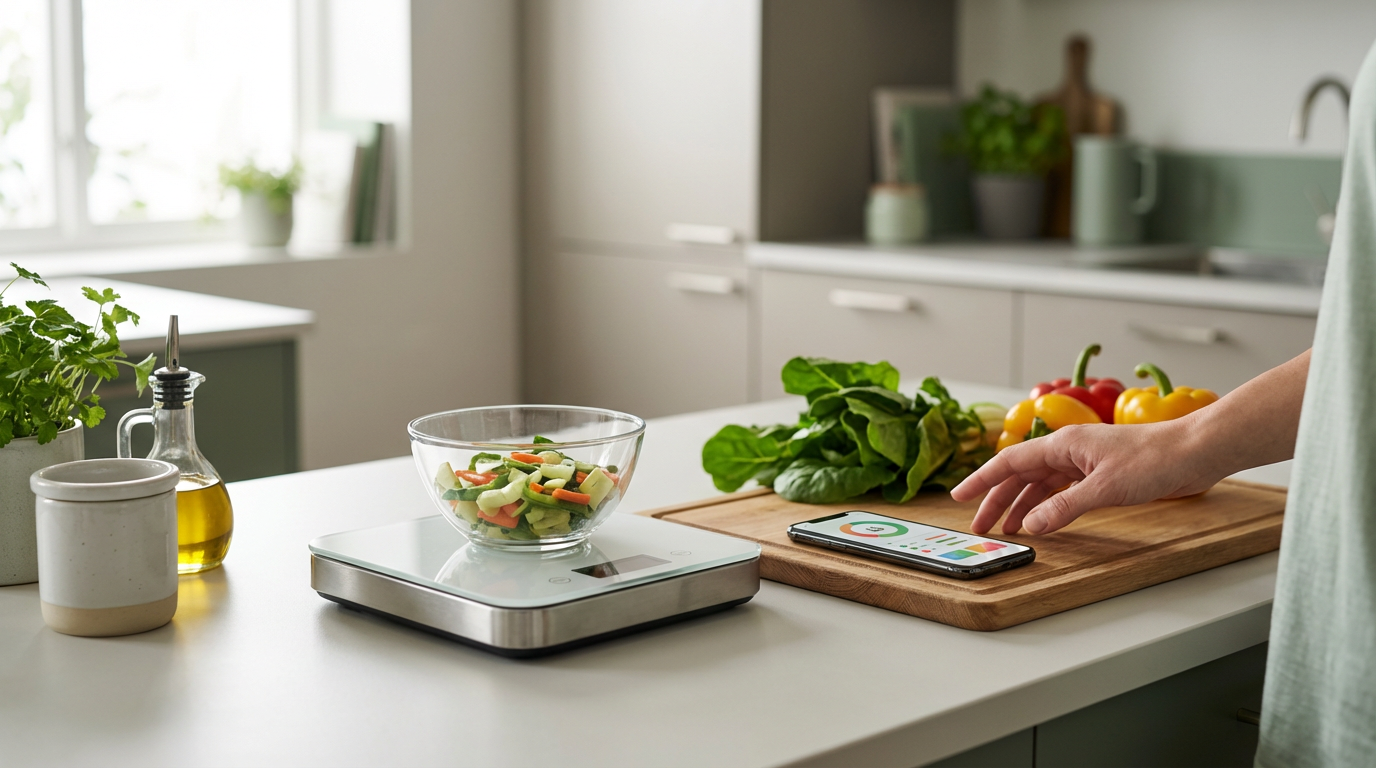
But the real game-changer for family meal calorie tracking is smart kitchen equipment that automates the process. Qalzy's AI-powered kitchen scale recognizes foods automatically and logs them instantly. Instead of weighing chicken, opening an app, searching for "chicken breast," and manually entering the weight, you simply place the food on the scale. The AI identifies it and logs the calories and macros automatically.
This type of technology bridges the gap between accuracy and convenience – exactly what busy parents need.
Sample Day: Quick Food Logging in Action
Here's how streamlined tracking looks in real life:
Breakfast (logged while coffee brews): Oatmeal with banana and almond butter – 3 ingredients, 2 minutes to log.
Lunch (logged after eating): Leftover chicken and rice from last night's dinner – already saved in app, 30 seconds to adjust portion size.
Dinner (logged after kids' bedtime): Homemade pizza night. Logged: 2 slices of pizza (estimated), side salad with dressing. Didn't worry about tracking the exact cheese blend or sauce recipe.
Total logging time: Under 5 minutes for the entire day.
Common Mistakes to Avoid When You Track Calories as a Busy Parent
Trying to Track Everything Perfectly
Perfection is the enemy of consistency. It's better to track 80% of your food intake for three months than to track 100% for three days before burning out.
Ignoring Cooking Oils and Condiments
These add up fast. A tablespoon of oil for sautéing vegetables adds 120 calories. Mayo on sandwiches, salad dressing, butter on toast – these "little" additions can easily add 300-400 calories to your day.
Not Planning for Family Food Chaos
Some days, dinner will be drive-through food because practice ran late. Some days, you'll eat the kids' leftover mac and cheese standing at the counter. Build these realities into your tracking strategy instead of pretending they won't happen.
Abandoning Tracking on Weekends
Weekends often involve different eating patterns – brunch instead of breakfast, family pizza night, snacking during movie time. Don't let these variations derail your entire week. Adapt your tracking to weekend rhythms instead of skipping it entirely.
Making It Sustainable Long-Term
The goal isn't to track calories forever. It's to develop better portion awareness and food habits that support your health goals. Most people find they can transition to intuitive eating after 3-6 months of consistent tracking.
Use your tracking data to identify patterns. Maybe you consistently underestimate pasta portions, or you eat more on days when you skip afternoon snacks. These insights help you make lasting changes.
When to Consider Upgrading Your Tools
If you've been trying to make traditional food logging work for months without success, it might be time to invest in better tools rather than more willpower.
Smart kitchen scales like Qalzy can reduce logging time by up to 70% while improving accuracy. When tracking becomes effortless, you're more likely to stick with it long enough to see results.
For busy parents, the time saved often pays for the investment within the first month. Five extra minutes per day adds up to over 30 hours per year – time you can spend with your family instead of wrestling with food databases.
Involving the Family (Without Making It Weird)
You don't need to turn family dinner into a nutrition lesson, but you can model healthy habits without making it a big deal.
Kids notice when you take a photo of your meal or use a kitchen scale. If they ask, keep it simple: "I'm learning about portion sizes to stay healthy." This normalizes paying attention to food choices without creating anxiety around eating.
Some families find it fun to use nutrition calculators together to learn about different foods. But keep it light and optional – the goal is health awareness, not food obsession.
FAQ
How accurate does my tracking need to be for weight loss? For sustainable weight loss, aim for 80% accuracy. This means logging most of your food most of the time, with reasonable portion estimates. Perfect precision isn't necessary and often leads to burnout.
Should I track calories on weekends and holidays? Yes, but with modified expectations. You might log main meals but skip tracking every holiday cookie. Consistent tracking helps you understand your patterns, even during special occasions.
What if my family eats different foods than I do? This actually makes tracking easier. Log your grilled chicken and vegetables while letting the kids' chicken nuggets go untracked. You only need to monitor your own intake.
How long should I track calories as a busy parent? Most people benefit from 3-6 months of consistent tracking to develop portion awareness and identify eating patterns. After that, many can maintain their goals with occasional check-ins rather than daily logging.
Is it worth investing in a smart kitchen scale? If you've struggled with traditional tracking methods, smart scales can be game-changers. They eliminate the most time-consuming parts of food logging while improving accuracy. For busy parents, the time savings often justify the cost.
What about tracking when eating out with the family? Focus on estimating your main dish and any obvious additions like appetizers or desserts you ate. Most restaurant meals are higher in calories than home-cooked food, but exact precision isn't necessary for long-term success.
Your Next Steps
Tracking calories as a busy parent doesn't have to be another item on your overwhelming to-do list. Start with one simple change: focus on logging just your dinner portions for one week. Use estimates, don't stress about perfection, and see how it feels.
If traditional logging still feels too cumbersome, consider tools that automate the process. Qalzy's smart kitchen scale and app can transform calorie tracking from a chore into a seamless part of your cooking routine.
The goal isn't to become a calorie-counting robot. It's to develop sustainable habits that support your health goals while fitting into your real life as a parent. Start small, be consistent, and remember that good enough is often better than perfect when it comes to long-term success.
For more practical nutrition tips and family-friendly meal ideas, check out our recipe collection designed specifically for busy parents who want to eat well without the stress.