Complete Guide to Tracking Calories for Family Meal Planning
The Complete Guide to Tracking Calories While Managing Family Meal Planning
You're standing in your kitchen at 5 PM, staring at the fridge while three different family members shout their dinner preferences from the other room. You want to stick to your calorie goals, but between soccer practice, work deadlines, and everyone's dietary preferences, tracking calories while meal planning for family feels impossible.
Here's the reality: managing your own nutrition goals while feeding a family doesn't have to be an either-or situation. With the right approach, you can create meals that work for everyone while staying on track with your calorie and macro targets.
This guide will show you exactly how to balance both without losing your sanity or spending hours in the kitchen.
Why Family Meal Planning Makes Calorie Tracking Harder
Traditional calorie tracking assumes you're cooking for one person with consistent preferences. Family meal planning throws multiple curveballs:
- Different portion sizes: Your toddler needs 300 calories while your teenager needs 800
- Varying preferences: Someone always hates the vegetable you picked
- Time constraints: You have 30 minutes to feed everyone, not 30 minutes to weigh ingredients
- Multiple cooking methods: Kids want plain chicken, you want it seasoned
- Shared dishes: How do you track your portion of the family casserole?
The good news? These challenges have practical solutions.
Setting Up Your Family Meal Planning System
Start With Your Non-Negotiables
Before diving into meal plans, identify what you absolutely need:
- Your calorie target (whether for weight loss, maintenance, or muscle gain)
- Family dietary restrictions (allergies, medical needs)
- Time constraints (how much prep time you realistically have)
- Budget limits
- Kitchen equipment you actually use
Write these down. They'll guide every decision you make.
Choose Your Planning Method
You have three main approaches for tracking calories while meal planning for family:
Method 1: Family-Style with Individual Tracking Cook one meal, track your specific portions. Works well when family members eat similar foods in different amounts.
Method 2: Modular Meal Planning Prepare base ingredients (proteins, grains, vegetables) that everyone can combine differently. You control your portions and combinations.
Method 3: Dual Preparation Make slight modifications to family meals for your specific needs. For example, serve your chicken weighed and measured while family members get approximate portions.
Smart Strategies for Calorie Counting for Moms and Busy Parents
The "Cook Once, Eat Twice" Approach
Double your protein and vegetable prep on weekends. Use half for family dinners and half for your tracked meals throughout the week.
For example:
- Grill 2 pounds of chicken breast on Sunday
- Use 1 pound for family tacos (harder to track precisely)
- Pre-portion the other pound for your lunches and snacks
Master the Art of Component Cooking
Instead of making complete dishes, prepare components that everyone can mix and match:
- Proteins: Grilled chicken, ground turkey, baked salmon
- Carbs: Brown rice, quinoa, sweet potatoes
- Vegetables: Roasted broccoli, steamed green beans, raw carrots
- Flavor additions: Sauces, seasonings, cheese (measured separately)
This method makes portion control much easier while giving family members choices.
Use Strategic Substitutions
Make small swaps that don't change the family meal but help your tracking:
- Serve your pasta portion on a smaller plate (easier to measure)
- Use cauliflower rice for yourself while family gets regular rice
- Add extra vegetables to your plate, standard amounts to theirs
Creating Healthy Family Meals That Support Your Goals
The 50-25-25 Plate Method
This visual approach works for both family meals and individual tracking:
- 50% vegetables: Fill half the plate with non-starchy vegetables
- 25% lean protein: One palm-sized portion
- 25% complex carbs: One cupped-hand portion
Family members can adjust portions based on their needs while you maintain consistent ratios for easier tracking.
Batch Cook Your Tracking Staples
Identify 5-7 meals you can track easily and rotate them regularly:
- Sheet pan protein and vegetables
- Slow cooker chicken and sweet potatoes
- Taco/burrito bowls with measured components
- Stir-fry with pre-portioned ingredients
- Soup (easy to measure per serving)
Having reliable, trackable meals in rotation reduces decision fatigue and keeps you consistent.
Make Vegetables the Star
Vegetables are low in calories but high in volume and nutrients. They're your secret weapon for family meals:
- Start dinner prep by chopping vegetables
- Add extra vegetables to family favorites (spinach in pasta sauce, zucchini in meatballs)
- Serve a simple salad or raw vegetables while cooking
- Keep frozen vegetables on hand for quick additions
Meal Prep and Calorie Tracking: A Practical System
Sunday Prep Session (90 Minutes)
First 30 minutes:
- Wash and chop vegetables for the week
- Cook 2-3 proteins in different styles
- Prepare 2-3 grain/carb options
Next 30 minutes:
- Pre-portion your proteins and carbs for easy tracking
- Prepare any sauces or seasonings
- Set up grab-and-go snacks
Final 30 minutes:
- Plan 3-4 family dinners using prepped ingredients
- Write shopping list for remaining items
- Set up your tracking app with planned meals
The Container Strategy
Invest in clear, stackable containers in standard sizes. This makes portion estimation much more accurate:
- Small containers (1 cup): Perfect for grains and starches
- Medium containers (1.5 cups): Ideal for mixed dishes
- Large containers (2+ cups): Great for salads and vegetable-heavy meals
When you use the same containers consistently, you develop an intuitive sense of portion sizes.
Common Mistakes to Avoid
Trying to Track Everything Perfectly
You don't need to weigh every grain of rice. Focus on tracking your largest calorie contributors:
- Proteins (usually 150-300 calories per serving)
- Fats (oils, nuts, cheese - small amounts, high calories)
- Grains and starches (100-200 calories per serving)
Vegetables matter less for calorie tracking unless you're eating them with significant added fats.
Making Everyone Eat "Diet" Food
Your family doesn't need to eat like they're cutting calories. Instead:
- Serve appropriate portions for each person's needs
- Add calorie-dense foods to growing kids' plates
- Keep your modifications subtle and personal
Abandoning the System When It's Not Perfect
Some days you'll eat pizza and have no idea how many calories you consumed. That's normal family life. The goal is consistency over perfection.
Track what you can, estimate when you must, and get back to your system the next day.
Over-Complicating Meal Variety
You don't need 30 different dinner ideas. Most families happily rotate through 10-15 meals. Focus on mastering a smaller number of meals rather than constantly trying new recipes.
Tools and Technology That Actually Help
While traditional food logging apps work, they're often tedious for busy parents. Smart kitchen tools can streamline the process significantly.
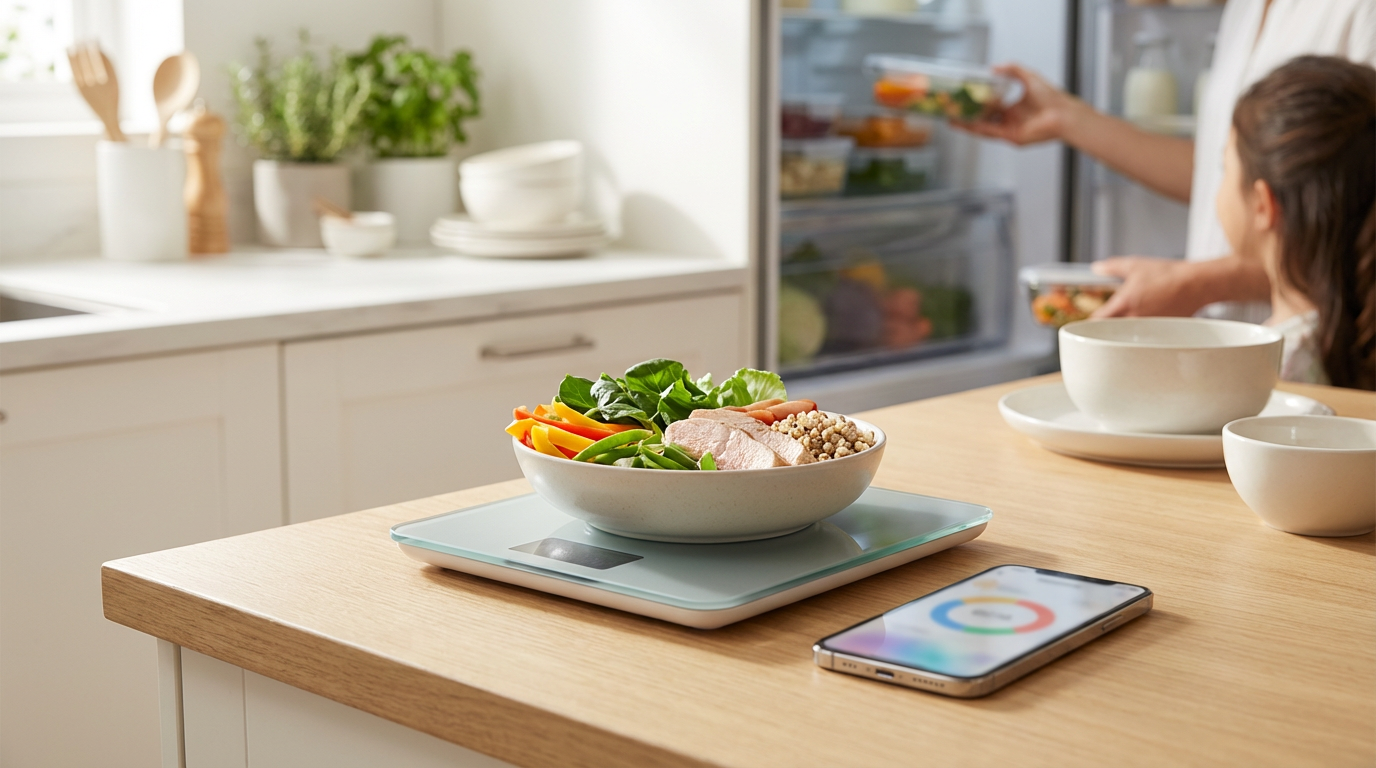
Qalzy's AI-powered kitchen scale recognizes foods automatically and tracks calories without manual database searching. Instead of spending 5 minutes logging ingredients, you simply place food on the scale and get instant nutrition information.
This becomes especially valuable during family meal prep when you're measuring multiple ingredients quickly.
Other helpful tools include:
- Digital food scale (essential for accuracy)
- Measuring cups and spoons you actually use
- A reliable calorie tracking app
- Meal planning templates or apps
Sample Week: Putting It All Together
Here's what tracking calories while meal planning for family might look like in practice:
Sunday: Prep day - cook proteins, chop vegetables, plan week
Monday: Family taco night - pre-measured components make tracking easy
Tuesday: Sheet pan dinner - your portion measured, family gets larger servings
Wednesday: Leftover remix - use Monday's taco ingredients in salads and bowls
Thursday: Slow cooker meal - easy to portion and track
Friday: Pizza night - estimate and enjoy, back to tracking tomorrow
Saturday: Breakfast for dinner - simple ingredients, easy tracking
Notice how some meals are easier to track than others. Plan your week with a mix of precision and flexibility.
Making It Sustainable Long-Term
Start Small
Don't overhaul your entire meal planning system at once. Pick one strategy from this guide and implement it for two weeks before adding another.
Involve Your Family Appropriately
Kids can help with meal prep in age-appropriate ways. Teenagers might appreciate learning about nutrition. But remember - your tracking goals are yours, not theirs.
Plan for Real Life
Build flexibility into your system:
- Have backup meals for busy nights
- Keep emergency snacks that fit your goals
- Accept that some meals won't be perfectly tracked
Celebrate Small Wins
Successfully tracking calories for three family dinners this week? That's progress. Preparing grab-and-go lunches that everyone enjoyed? Win.
Small, consistent improvements matter more than perfect execution.
Advanced Tips for Experienced Trackers
Recipe Scaling for Families
When you find a recipe that works for both your goals and family preferences, create multiple versions:
- Original recipe for 4 people
- Double batch for meal prep
- Single serving for days when you're eating differently
Save these variations in your tracking app or recipe collection.
Macro Balancing with Family Meals
If you're tracking macronutrients (protein, carbs, fat) in addition to calories:
- Adjust your ratios throughout the day, not just at dinner
- Use breakfast and lunch to balance what you'll eat at family dinner
- Keep high-protein, low-carb snacks available for quick macro adjustments
Creating Your Own Food Database
Track your most common family meals once, thoroughly. Then save them as custom recipes. This front-loads the work but makes future tracking much faster.
For frequently used ingredients like your family's favorite marinara sauce or the specific bread you always buy, create custom entries with exact nutrition information.
Troubleshooting Common Scenarios
When Kids Are Picky Eaters
Picky eating actually makes your tracking easier in some ways - kids often eat the same foods repeatedly. Focus on:
- Making sure their preferred foods are reasonably healthy
- Adding variety to your own plate
- Not turning meals into battles over food
Managing Different Dietary Needs
If family members have allergies, medical dietary requirements, or strong preferences:
- Master a few "base" meals that work for everyone
- Learn simple modifications (gluten-free pasta, dairy-free cheese)
- Keep safe backup options available
Your calorie tracking can adapt around these constraints.
Eating Out and Social Events
Family life includes restaurant meals, birthday parties, and social events. Strategies that work:
- Check menus in advance when possible
- Focus on portion control rather than perfect tracking
- Balance indulgent meals with lighter options the same day
- Remember that one meal doesn't derail your progress
Technology Solutions That Save Time
Smart kitchen technology continues improving, making family meal planning and calorie tracking more manageable.
Qalzy's nutrition calculator can help you determine appropriate calorie targets for your goals, while the smart scale eliminates much of the tedious logging that makes tracking unsustainable for busy parents.
The key is finding tools that actually save time rather than adding complexity to your routine.
FAQ
How accurate does my calorie tracking need to be when cooking for a family? Aim for 80-90% accuracy on your largest calorie contributors (proteins, fats, grains). Don't stress about measuring every vegetable perfectly. Consistency matters more than perfect precision.
Should I make my kids track calories too? Generally, no. Unless recommended by a pediatrician for specific medical reasons, children and teenagers don't need to track calories. Focus on providing balanced, nutritious meals and teaching healthy eating habits.
What if my family complains about "health food"? Make changes gradually and focus on additions rather than restrictions. Add vegetables to familiar dishes, use whole grain versions of foods they already like, and involve them in choosing new foods to try.
How do I handle family meals when I'm trying to lose weight? Use smaller plates for yourself, fill half your plate with vegetables, and control your portions of higher-calorie foods. You don't need to eat completely different meals from your family.
Is meal prep worth it for families? Yes, but adapt it to your family's needs. You might prep ingredients rather than complete meals, or prepare your tracked portions while making family meals fresh.
What's the best way to track mixed dishes like casseroles? Either create a recipe in your tracking app with all ingredients, or deconstruct the dish (estimate the chicken, rice, and vegetables separately). Both methods work - choose what's easier for you.
Moving Forward with Confidence
Tracking calories while managing family meal planning requires some upfront planning, but it becomes much easier with practice. The key is finding a system that works with your family's lifestyle, not against it.
Start with one or two strategies from this guide. Maybe that's Sunday meal prep, or switching to component-style cooking, or simply using smaller plates for better portion control.
Remember that perfect tracking isn't the goal - sustainable habits that help you reach your health goals while keeping your family well-fed and happy are what matter.
Ready to streamline your family meal planning and calorie tracking? Explore how Qalzy's smart kitchen tools can make nutrition tracking faster and more accurate, giving you more time to focus on what matters most - enjoying meals with your family.
The balance between personal health goals and family meal management is absolutely achievable. With the right approach, you can take care of your nutrition needs while creating positive food experiences for everyone at your table.