Why AI Food Scanner Apps Are So Inaccurate at Counting Calories
Why AI Food Scanner Apps Are So Inaccurate at Counting Calories
You snap a photo of your lunch, wait for the AI to work its magic, and get a calorie count that seems... off. Way off. Sound familiar?
If you've tried using AI food scanner apps inaccurate results are probably nothing new to you. These apps promise the convenience of instant nutrition tracking, but they consistently deliver wildly incorrect calorie estimates that can derail your weight loss or fitness goals.
The truth is, current AI food recognition technology faces fundamental challenges that make reliable calorie counting nearly impossible. Let's break down exactly why these apps struggle and what you can do about it.
The Core Problems with AI Food Recognition
Visual Estimation Is Inherently Flawed
Think about it: how can an app determine the exact weight of food from a 2D photo? It can't see depth, density, or hidden ingredients. A thick slice of pizza might look identical to a thin one from certain angles, but the calorie difference could be 200-300 calories.
Food scanner accuracy suffers because:
- Portion size guessing: The app has no way to know if that's a 4-ounce or 8-ounce chicken breast
- Cooking method confusion: Grilled chicken and fried chicken look similar but have vastly different calorie counts
- Hidden ingredients: That innocent-looking salad might be loaded with high-calorie dressing
- Angle and lighting issues: The same food photographed differently can yield completely different results
Database Inconsistencies Create Chaos
Most AI calorie app problems stem from unreliable food databases. These apps often pull from crowdsourced data where users submit their own nutrition information. The result? Massive variations for the same foods.
One app might list a medium apple at 80 calories while another says 120 calories. Multiply these discrepancies across every meal, and your daily calorie count becomes meaningless.
Real-World Examples of Scanner Failures
Let's look at some common scenarios where these apps fall short:
The Pasta Problem: You photograph a bowl of spaghetti with meat sauce. The app might recognize "pasta" but completely miss the ground beef, olive oil used in cooking, and parmesan cheese on top. Your 800-calorie meal gets logged as 300 calories.
The Smoothie Disaster: That green smoothie looks healthy and simple, but it contains banana, mango, protein powder, almond butter, and coconut milk. The scanner sees "green smoothie" and estimates 150 calories when the actual count is closer to 450 calories.
The Restaurant Roulette: Restaurant portions are notoriously inconsistent, and preparation methods vary widely. An AI scanner has no way to account for the extra butter, oil, or sauce that restaurants commonly use.
Why Calorie Estimation Errors Matter for Your Goals
These inaccuracies aren't just annoying—they can completely sabotage your progress.
For Weight Loss
If you're trying to maintain a 500-calorie daily deficit for steady fat loss, scanner errors can easily wipe out your deficit entirely. Underestimating your intake by just 200-300 calories per day means the difference between losing weight and maintaining your current weight.
For Muscle Building
Accurate macro tracking becomes crucial when you're trying to build muscle. Getting your protein targets wrong because of scanner errors can limit your progress in the gym.
For Medical Conditions
People managing diabetes or other conditions that require precise carbohydrate counting can face serious health consequences from inaccurate food tracking.
The Technology Limitations Behind the Problems
Machine Learning Needs Massive, Perfect Datasets
AI systems learn from training data, but food is incredibly complex and variable. Teaching an AI to distinguish between different types of bread, cooking methods, and portion sizes requires enormous amounts of perfectly labeled data that simply doesn't exist.
Context Is Everything
Humans understand context in ways that current AI cannot. We know that the "grilled chicken" at a fast-casual restaurant is probably marinated and contains more calories than plain grilled chicken at home. AI scanners miss these nuances entirely.
The Uncanny Valley of Food Recognition
Food recognition technology is stuck in an awkward middle ground. It's advanced enough to identify basic foods but not sophisticated enough to handle real-world complexity. This creates false confidence in users who assume the technology is more accurate than it actually is.
Better Alternatives to Food Photo Apps
So what works better than relying on AI food scanner apps inaccurate as they are?
Manual Logging with Verified Databases
While less convenient, manually searching for foods in apps with verified nutrition databases (like MyFitnessPal or Cronometer) gives you more control over accuracy. You can cross-reference multiple entries and choose the most reliable data.
Weighing Your Food
A simple kitchen scale eliminates the guesswork around portion sizes. When you know exactly how much you're eating, calorie counting becomes dramatically more accurate.
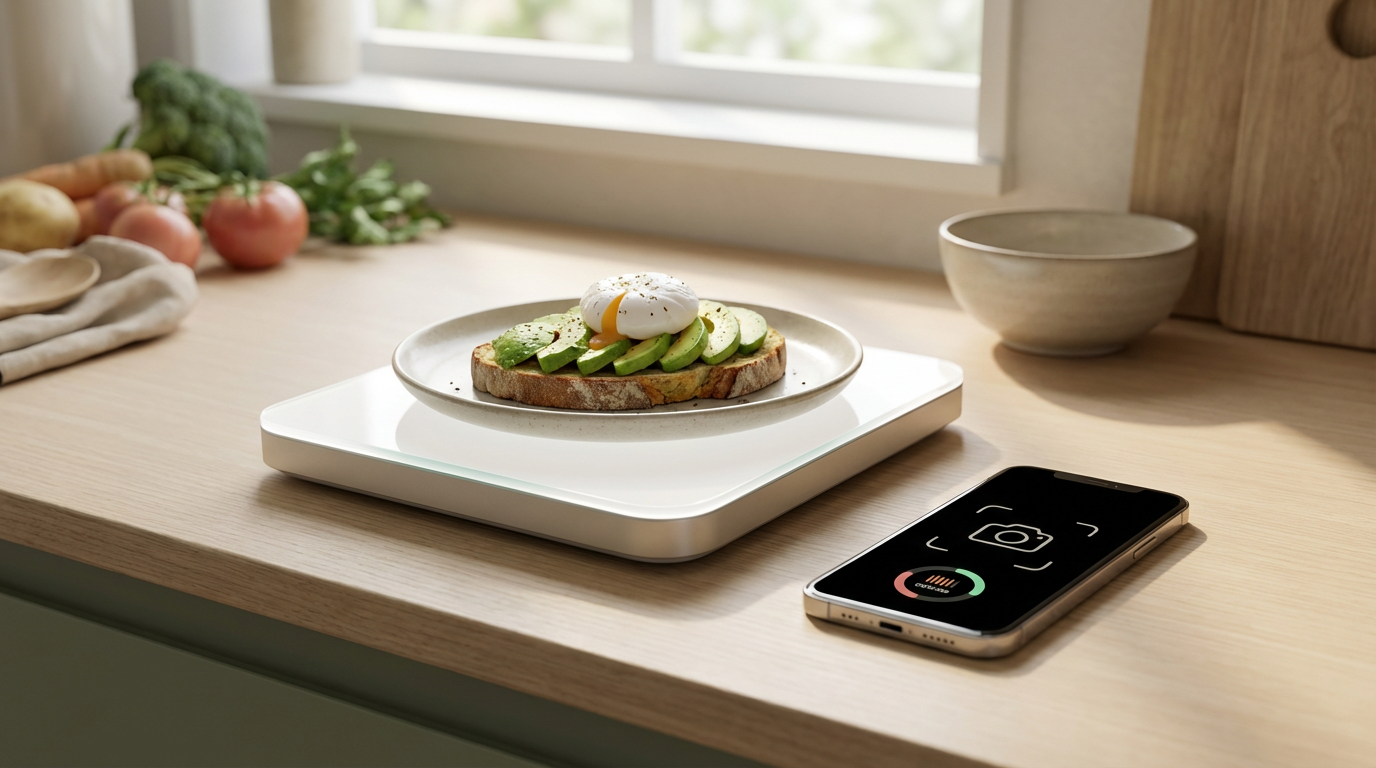
Smart Kitchen Scales with AI Integration
This is where technology like Qalzy's AI-powered kitchen scale makes sense. Instead of trying to guess portion sizes from photos, you get precise weights combined with AI that helps streamline the logging process. You maintain accuracy while reducing the tedium of manual entry.
Common Mistakes People Make with Food Scanners
Even when using these imperfect tools, you can minimize errors by avoiding these pitfalls:
- Trusting the first result: Always review and adjust the app's suggestions
- Ignoring cooking methods: Specify whether food is grilled, fried, or baked when possible
- Forgetting about additions: Remember to account for oils, sauces, and condiments
- Not double-checking portions: If the app suggests an unrealistic portion size, adjust it
- Assuming restaurant accuracy: Be extra skeptical of scanner results for restaurant meals
The Future of Food Tracking Technology
While current AI food scanners struggle with accuracy, the technology continues to evolve. Future improvements might include:
- 3D imaging: Better depth perception for more accurate volume estimation
- Spectroscopy integration: Technology that can actually analyze the nutritional content of food
- Context-aware AI: Systems that consider location, time, and user patterns for better predictions
Until these advances arrive, we're stuck with the current limitations.
Making Peace with Imperfect Technology
The goal isn't perfect calorie counting—it's consistent progress toward your health goals. If you choose to use food scanner apps, treat them as rough estimates rather than precise measurements.
Consider tracking trends over time rather than obsessing over daily accuracy. Are you generally eating in a calorie deficit? Are your energy levels stable? These bigger-picture metrics matter more than whether your lunch was 450 or 500 calories.
A Smarter Approach to Nutrition Tracking
Instead of relying solely on AI food scanner apps inaccurate as they often are, consider a hybrid approach:
- Use a kitchen scale for portion accuracy at home
- Learn to estimate portions visually for dining out
- Focus on whole foods that are easier to track accurately
- Track consistently rather than perfectly
- Monitor your results and adjust based on real-world outcomes
Tools like Qalzy bridge the gap between convenience and accuracy by combining precise weighing with intelligent food recognition. This approach eliminates the guesswork that plagues photo-based apps while still streamlining the tracking process.
Frequently Asked Questions
Q: Are any AI food scanner apps actually accurate? A: While some apps perform better than others, all photo-based food scanners face fundamental limitations with portion estimation and food complexity. Even the best ones should be used as rough estimates rather than precise measurements.
Q: How much can scanner errors affect my weight loss progress? A: Significant errors can completely eliminate your calorie deficit. If you're aiming for a 500-calorie daily deficit but consistently underestimate intake by 300-400 calories, you might maintain weight instead of losing it.
Q: Should I stop using food scanner apps entirely? A: Not necessarily. They can be useful for quick estimates, especially if you manually review and adjust their suggestions. Just don't rely on them as your sole tracking method for important health goals.
Q: What's the most accurate way to track calories? A: Weighing your food and using verified nutrition databases provides the highest accuracy. Smart scales that integrate with tracking apps offer a good balance of convenience and precision.
Q: Why do different scanner apps give me different results for the same food? A: Apps use different databases, algorithms, and training data. This leads to significant variations in their food recognition and calorie estimates, even for identical meals.
Q: Can I improve scanner accuracy somehow? A: Take photos from multiple angles, ensure good lighting, manually verify portion sizes, and always double-check the app's food identification before accepting results.
The Bottom Line
AI food scanner apps promise convenience but deliver inconsistency. While the technology continues to improve, current limitations make these apps unreliable for serious nutrition tracking.
If accurate calorie and macro tracking matters for your goals, invest in better tools and methods. A simple kitchen scale will serve you better than the fanciest AI scanner app. And if you want the best of both worlds—accuracy and convenience—consider solutions like Qalzy's smart scale and app that combine precise measurements with intelligent food recognition.
Remember: the best tracking method is the one you'll actually use consistently. Whether that's a basic food scale, a smartphone app, or a smart kitchen system, consistency beats perfection every time.